
Mountain Etiquette: The Do’s and Don’ts of Exploring the Alps
The Alps have a way of making you feel very small, in the best possible way. From snow-covered peaks
Read MorePosted 15-09-2026 by Lea Papillon
When most people picture a walking holiday in the French Alps, they probably think of summer. The high mountain trails are open, the days are long and hiking is firmly on the agenda.
But what happens once the main summer season comes to an end?
Autumn is a period of considerable change in the Alps. Conditions evolve as the weeks pass, the mountains begin their transition towards winter and the experience of walking can be quite different from July or August.
That raises an obvious question for anyone considering a trip outside the traditional summer season: is autumn actually a good time to go hiking in the French Alps?
Having lived, walked and organised walking holidays here in the Southern French Alps for many years, we think there are some good reasons to consider it, as well as a few practical differences you need to understand before deciding whether it is the right season for you.
Here are five factors worth considering.
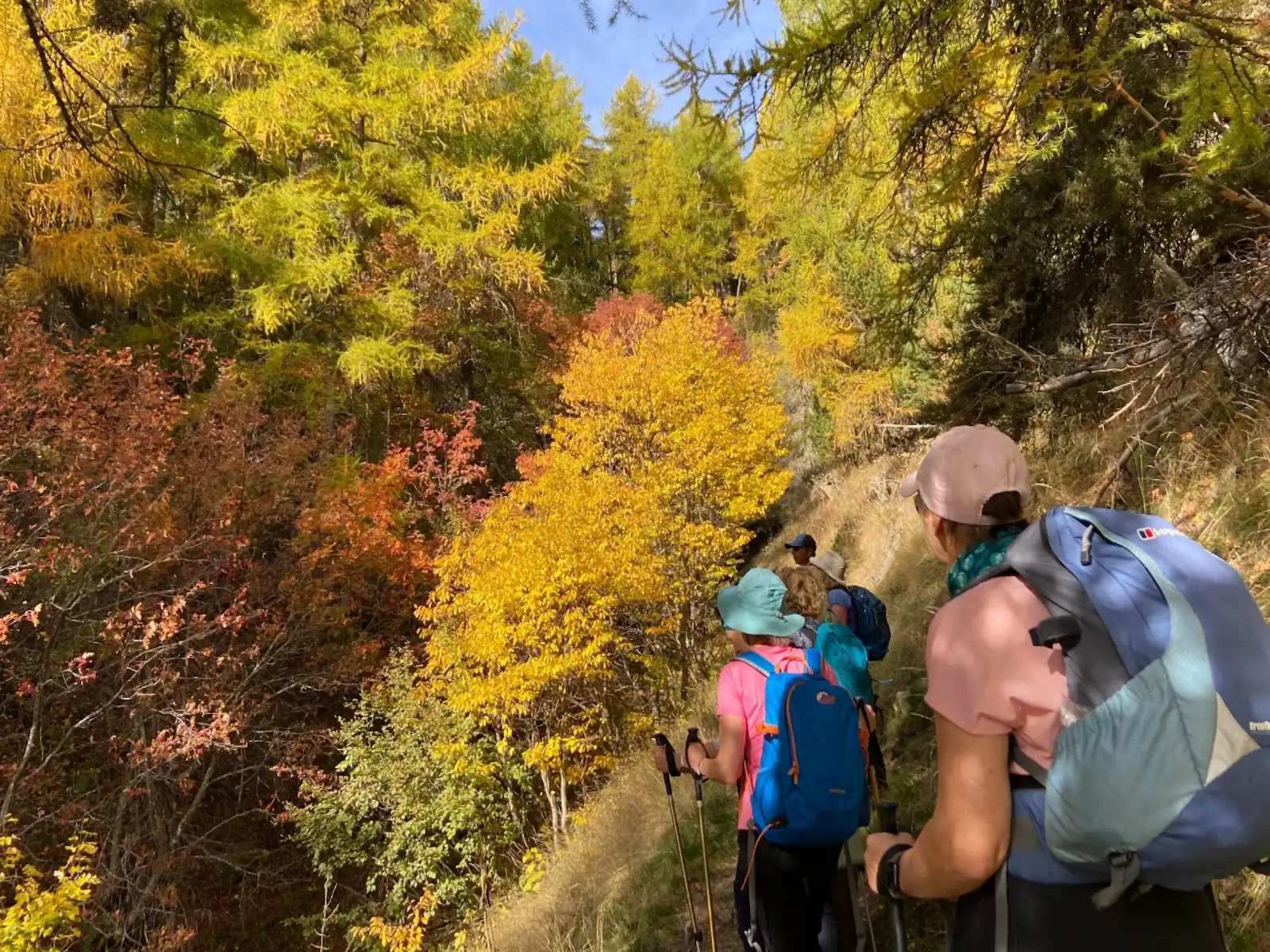
One of the noticeable differences when hiking in autumn is the change in temperature. Summer brings warm days and long daylight hours to the Southern French Alps, while temperatures gradually become cooler as autumn arrives. For walkers, this can make sustained physical effort particularly comfortable, especially on routes involving several hours of walking and a reasonable amount of ascent.
The change is gradual rather than sudden. September often retains much of the warmth of late summer, particularly during the day, before temperatures fall further as the season progresses. This makes early autumn an interesting period for walkers who want to enjoy the mountains as the season begins to change.
September is also still part of the season for some of the longer itineraries in the area. The Tour du Vieux Chaillol, for example, can be walked in September and follows a multi-day route through the Champsaur and Valgaudemar valleys.
The greater variation in temperature does require some thought about clothing. A cool morning can give way to much warmer conditions once the sun reaches the trail, while exposed areas at altitude can feel colder again. Layers are therefore particularly useful at this time of year, allowing you to adjust as conditions change during the day. Our Walking Kit List has more detailed advice on what to bring for a walking holiday in the Alps.
July and August are the main summer holiday months in the French Alps, when more visitors are travelling to the mountains for walking, holidays and outdoor activities. Once this period comes to an end, visitor numbers generally begin to fall and the mountains settle into a quieter rhythm.
This change is particularly noticeable on popular trails and around busy trailheads. Outside the main holiday period, you are likely to encounter fewer groups on the paths, making it easier to walk at your own pace and enjoy a greater sense of space.
This does not mean having the mountains entirely to yourself. Popular routes can still attract local walkers, particularly at weekends when the weather is good. Rather, the difference is in the overall atmosphere: the pace is slower, the trails are generally quieter and there is less of the activity associated with the height of the summer holiday season.
Here in the Southern French Alps, many of the valleys and walking areas tend to be quieter than the larger and better-known Alpine destinations, even during summer. Once the main holiday period has passed, this sense of space can become even more noticeable.
The Dévoluy is a good example. It is a distinctive mountain area with an extensive choice of walking routes, and autumn offers the opportunity to explore them outside the main summer period. Our Dévoluy Alpine Hikes Self-Guided Holiday runs into autumn and is based around a choice of walks in the area.
One of the pleasures of walking in autumn is seeing the landscape change from one week to the next. The greens of summer gradually give way to warmer colours in the valleys and forests, while the high mountains begin to take on a more wintry appearance.
Larches are one of the characteristic trees of the Southern French Alps and play a particularly important part in this transformation. Unlike most conifers, larches are deciduous: their needles turn yellow and gold in autumn before falling for winter. Alongside beech and other deciduous woodland, they bring a considerable amount of colour to the mountain forests.
The changes do not happen everywhere at the same time. Altitude, exposure and local temperatures all play a part, so a walk that moves through different elevations can take you through several stages of the season in a single day.
The Champsaur Valley is a good example of this variety. Its walking trails take you through forests, open pastures and traditional mountain villages, with the higher peaks of the Écrins providing a very different backdrop above. In autumn, these different elevations and landscapes change at their own pace: colour develops through the forests and valley sides while the higher mountains may already be showing the first signs of winter. This is one of the reasons why our Champsaur Valley Self-Guided Hiking Adventure is particularly suited to autumn.
There is no need to seek out a particular viewpoint or plan an entire holiday around seeing autumn colour. It simply becomes part of the landscape you are walking through, and gives familiar Alpine terrain a noticeably different character from summer.
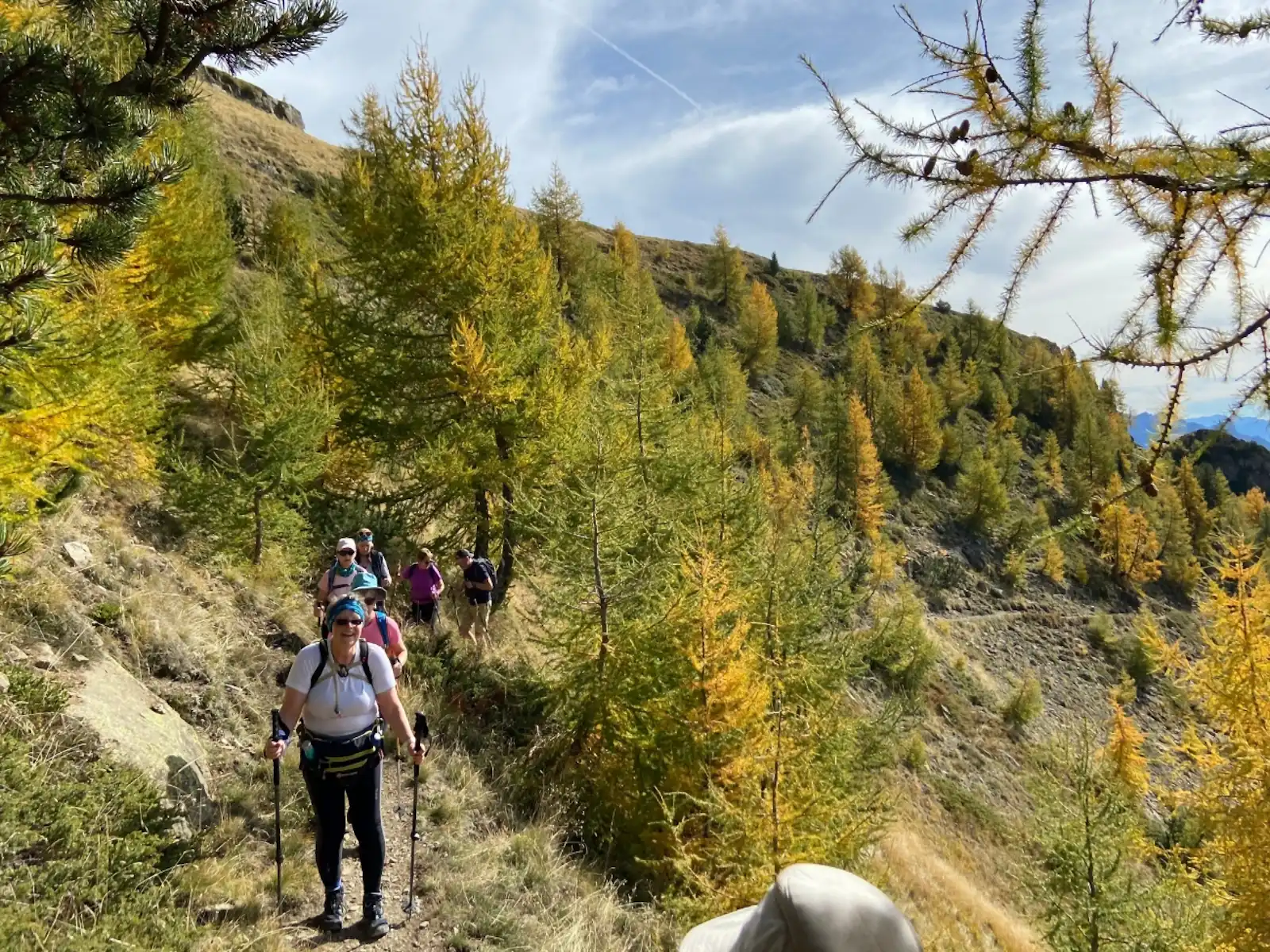
Where you choose to walk in the Alps can make a difference in autumn. The Alpine range covers a large area, and weather patterns vary considerably depending on location, altitude and the surrounding mountain ranges.
The Southern French Alps are influenced by both Alpine and Mediterranean weather patterns. This contributes to the particularly sunny climate of the Hautes-Alpes, which enjoys around 300 days of sunshine a year.
This sunny climate is one of the reasons the area works so well for outdoor activities beyond the main summer months. Autumn can bring some very pleasant days for walking, with bright, clear conditions and cooler temperatures as the season progresses.
Of course, mountain weather is always variable, whatever the broader regional climate. Conditions can change quickly, particularly at altitude, and autumn can bring rain, wind and the first snow higher in the mountains. Checking the forecast and current conditions therefore remains important when planning a walk.
For anyone considering an autumn walking holiday, this combination of a high mountain environment and the climatic influence of southern France is one of the particular advantages of choosing the Southern French Alps.
Autumn is an important transition period for wildlife in the Alps, and walking at this time of year gives you a chance to notice some of these seasonal changes taking place.
Chamois are present in the mountains throughout the year, but as autumn progresses they can begin moving down from the highest summer ground towards lower elevations. Their rut also takes place in late autumn, when males become much more active. Ibex can also be encountered in the high mountain environment, although, as with any wildlife sighting, being in the right habitat is no guarantee that you will see them.
Marmots are going through a very different transition. During late summer and early autumn, they spend much of their time feeding and building up the reserves they need for hibernation. As the season progresses, sightings become less likely before they eventually disappear underground for the winter.
Birdlife is changing too. Golden eagles remain in the Alps throughout the year and can sometimes be spotted soaring above the valleys and mountain slopes. At the same time, autumn is a period of migration, with some bird species leaving the mountains or passing through on their journey south. It adds another seasonal element to look and listen for while you are walking.
Autumn also brings changes at ground level. It is mushroom season in the mountain forests, while berries, nuts and other wild foods appear at different points as the season develops. You do not need to be actively looking for wildlife or foraging for these details to add interest to a walk; they are simply part of being in a mountain environment preparing for winter.
You can read more about the wildlife found in the Southern French Alps in our dedicated guide. As always, wildlife is best observed quietly and from a respectful distance, particularly at a time of year when animals are feeding, breeding or conserving energy ahead of winter.
There is no single best place for autumn hiking in the Southern French Alps. Where we would recommend depends on the type of walking you enjoy, your level of experience and when in the season you are travelling. These are three areas we particularly recommend.
The Champsaur is a good choice if you enjoy varied walking and want to experience more than just the high mountains. Routes take you through forests, farmland and traditional villages as well as onto higher ground, with the Écrins rising above the valley.
Our Champsaur Valley Self-Guided Hiking Adventure runs in September and October in autumn, and includes six days of walking through different parts of the valley, with baggage transfers between accommodation. It is a good way to see how the landscape and character of the Champsaur change as you travel through it on foot.
The Dévoluy has a very different character. Limestone mountains dominate the landscape, with open slopes, gorges and unusual rock formations creating a distinctive setting for walking. There is a broad range of routes, from relatively gentle walks to more demanding mountain days.
Our Dévoluy Alpine Hikes Self-Guided Holiday gives you a choice of walks from your accommodation, making it possible to explore different parts of the massif during your stay.
If you are drawn to a more dramatic high-mountain environment, the Écrins is an obvious area to consider. The national park contains some of the highest mountains in the French Alps, while the Champsaur and Valgaudemar valleys provide access to a wide range of walks below the highest peaks.
Our Écrins National Park Self-Guided Walking Holiday is based around a choice of walks in these valleys. It gives you the opportunity to explore different parts of the Écrins landscape while choosing walks suited to your level and the conditions during your stay.
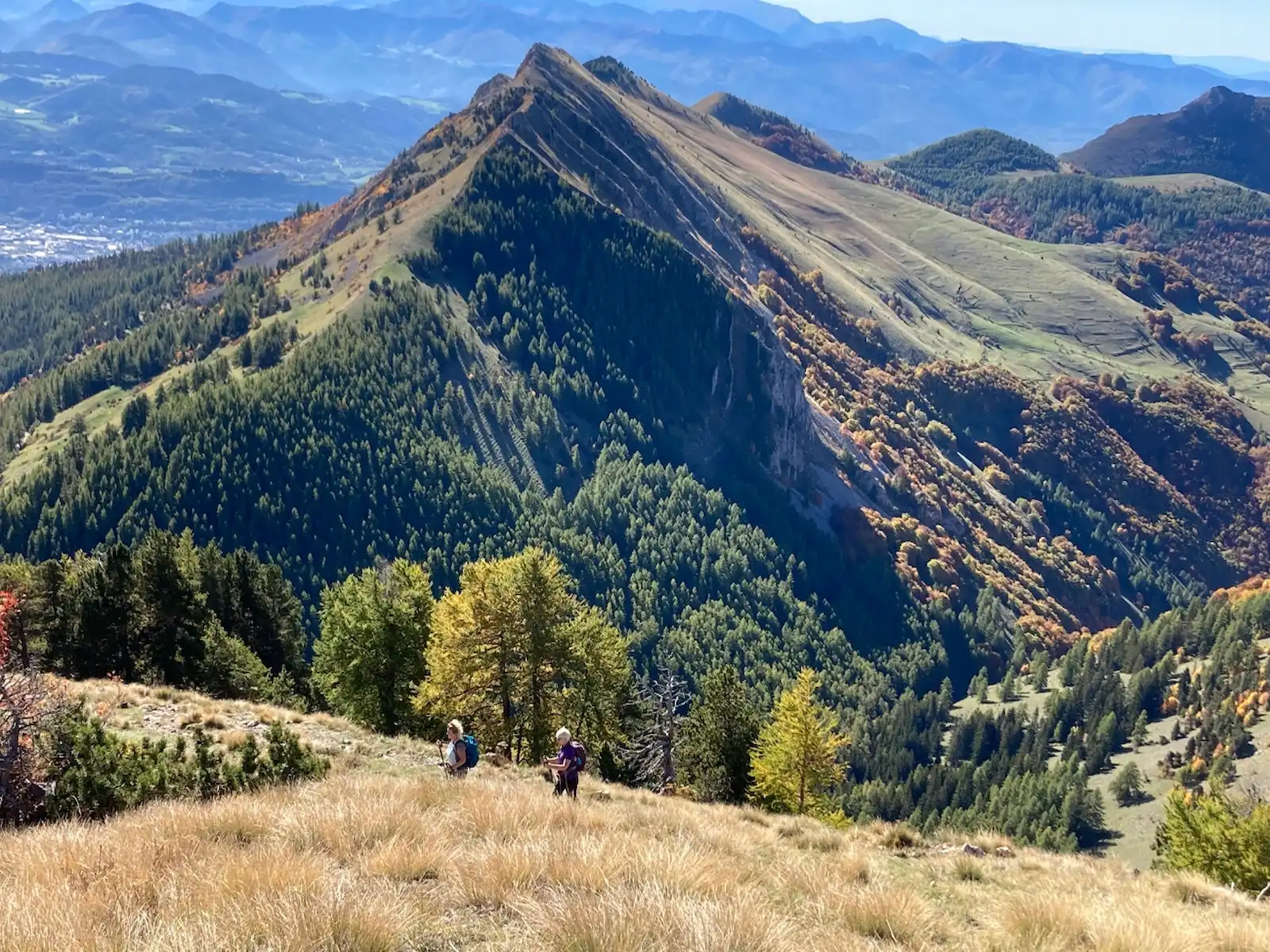
Autumn can be an excellent time for walking in the French Alps, but it does require slightly different planning from a summer trip. As the season progresses, daylight hours shorten and conditions at altitude can change more quickly, so it becomes increasingly important to choose walks that are appropriate for the day.
Early snow is possible higher in the mountains, particularly later in autumn. A route that is clear and straightforward in the valley can therefore have very different conditions higher up. Checking the weather forecast and current trail conditions before setting out is important, rather than assuming that a route will be snow-free because conditions are mild at your accommodation.
Daylight is another consideration. By October, there is noticeably less time between sunrise and sunset than during the summer months. Starting reasonably early and allowing enough time to complete your route comfortably gives you a useful margin if the walk takes longer than expected.
Some seasonal mountain infrastructure also begins to change. In the Écrins National Park, for example, removable footbridges used to cross certain mountain streams are progressively taken down towards the end of the walking season. Mountain refuges and other seasonal services may also close or operate differently, so these are details worth checking when planning higher or more remote routes.
Finally, autumn is hunting season in France. This does not prevent you from walking, but it is sensible to be aware of local activity, pay attention to signs and make yourself clearly visible when necessary.
None of these points should put you off an autumn walking holiday. They simply make good preparation more important. With suitable routes, the right equipment and up-to-date local information, autumn remains a very rewarding time to explore the mountains on foot.
Yes. For walkers who enjoy cooler temperatures, quieter trails and seeing the mountains as the seasons change, autumn can be an excellent time to explore the French Alps. Here in the Southern French Alps, the generally sunny climate is another advantage for walking beyond the main summer months.
It is a season that requires a little more flexibility. Days become shorter, conditions can change at altitude and some mountain infrastructure begins to close as winter approaches. Choosing appropriate routes and checking current conditions therefore become increasingly important as autumn progresses.
There are other pleasures to travelling at this time of year too. Autumn is part of the local harvest season, with mushrooms, apples, pears, walnuts and other seasonal produce appearing in markets, shops and restaurants. For those who are as interested in discovering the local food as they are in walking, our Gourmet Alpine Walking Holiday brings the two together on an autumn departure.
With changing landscapes, plenty of opportunities to walk and a different rhythm in the mountain valleys, autumn has plenty to offer those considering a walking holiday in the Southern French Alps.
The Alps have a way of making you feel very small, in the best possible way. From snow-covered peaks
Read More.jpg)
If you've tried to plan a holiday recently, you'll probably recognise this. A few searches on Google
Read More
Every July, the world's attention turns to the Alps. As the Tour de France reaches the mountains, mi
Read More
If you're planning a walking holiday, one of the first decisions you'll need to make is whether to c
Read More
0 comments
Submit a comment