
Staying in a Mountain Refuge in Winter: What to Expect
Staying overnight in a mountain refuge is one of the experiences that makes a winter journey through
Read MorePosted 06-01-2026 by Léa Papillon
Snowshoeing is often seen as tiring, technical or only suitable for experienced mountain walkers. In reality, it’s one of the most accessible winter activities, and one of the easiest ways to feel confident in the mountains, even if you’ve never done a winter sport before.
If you can walk, you can snowshoe. With a few simple techniques and the right approach, confidence comes quickly. Here’s everything you need to know to get started.
And if you're deciding which winter activity to try, our comparison of snowshoeing and cross-country skiing explains the differences in learning curve, fitness requirements and balance.
At its core, snowshoeing is just walking, and snowshoes that help you stay on top of the snow rather than sinking into it. It’s a slow, steady way to explore winter landscapes: forests, open valleys, frozen lakes and panoramic viewpoints. Unlike skiing, snowshoeing allows you to stop easily, take photos, enjoy the silence and move at your own pace. This makes it perfect for travellers looking for a calm, immersive winter experience.
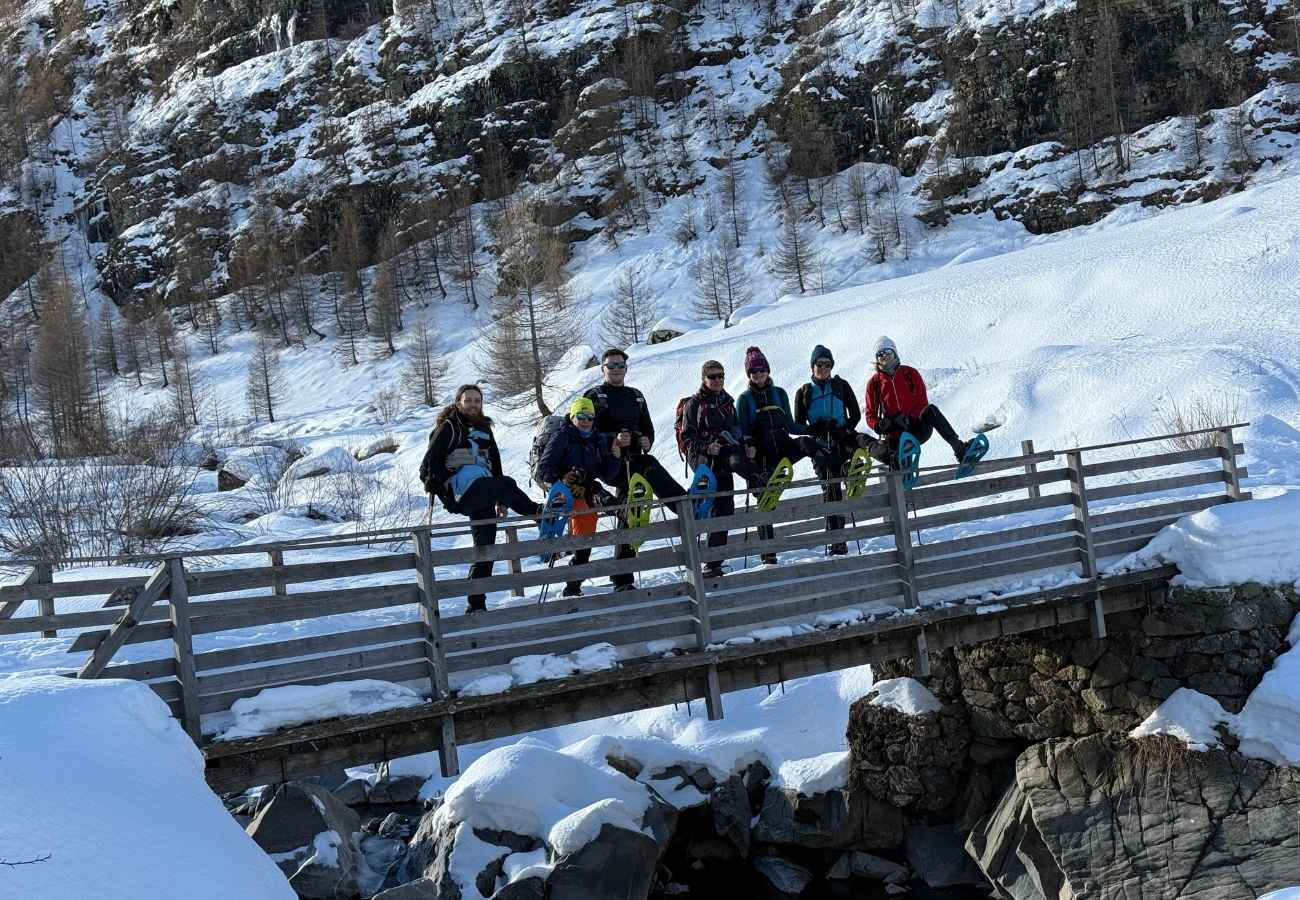
One of the biggest surprises for first-time snowshoers is how natural it feels.
On gentle ground, you walk almost exactly as you would on a normal path. Snowshoes are designed to avoid catching on each other, so there’s no need to exaggerate your steps. A relaxed, steady rhythm is all you need.
When climbing, shorten your steps and keep your weight centered. Snowshoes have built-in crampons for traction under the foot, which helps you grip the snow without slipping. On steeper slopes, many snowshoes include a small heel lift that reduces strain on your calves, something beginners quickly appreciate. On very steep slopes you can kick the front of your snowshoe into the slope to make a small step to put your weight on to. Snowshoes have claw-like grips on the front to make this easy.
Descending can feel intimidating at first, but it’s usually easier than expected. Keep your knees slightly bent, your weight centred and take small, controlled steps. Using poles adds a lot of stability and helps you feel secure. On most snowshoes, you can also clip in the foot plate, which adds extra stability for going downhill.
Sometimes in the mountains you might be confronted with traversing a slope. Here it is important to stamp as flat a path as possible in the slope so you can put as much of your snowshoe in contact with the ground as possible. Clipping in the foot plate also increases stability in these situations. If you are a beginner, staying near the end of the group for a traverse is a good tip: each person walking the path compacts it, making it easier for those behind.
.jpg)
Snowshoeing in deep powdery snow is very different from snowshoeing in icy hard packed snow. In powder, breaking the trail can be physically demanding. If you’re with a guide, they will often do this, but it’s good to experience it yourself. On longer routes, it’s common to take turns breaking trail. The further back you are, the easier it gets as the trail becomes compacted.
For icy conditions, people are often scared, but your snowshoes’ crampons and grips provide good traction, and exaggerating your steps slightly with a small stamp improves grip further. Most snowshoeing conditions fall somewhere between powder and hard-packed snow. Be aware that conditions can change over the day: a hard-packed path in the morning may soften after several hours of sun, making walking more tiring. This is why it is best to go with a guide who knows this type of local information and can adapt the route accordingly.
Snowshoeing is physically more demanding than walking. You have slightly heavier feet than normal which you are lifting up each time, and the conditions of the snow and cold weather will also play a part in the amount of effort required for snowshoeing. As such it is important to take this in consideration when planning a route. 5km on hard packed snow is not going to feel the same as deep powder! We plan our routes with this in mind and always adapt on the day according to the conditions.
.jpg)
Confidence on snowshoes doesn’t come from pushing yourself, it comes from starting in the right conditions. A few simple tips help beginners feel at ease very quickly:
Gentle terrain is ideal for beginners, as it allows you to focus on your movement without worrying about balance. Moving at your own pace is equally important. Snowshoeing isn’t about speed, and regular pauses are a normal part of the experience, especially when you’re new to it.
Poles also play a key role in building confidence. They help with rhythm on flat sections and provide extra support on climbs and descents. Most beginners notice that snowshoes feel slightly unusual during the first few minutes, but that sensation quickly fades. Within fifteen to twenty minutes, walking usually feels natural again.
One of the biggest barriers for beginners is the idea that snowshoeing requires a lot of specialised equipment. In reality, it’s much simpler than that.
Comfortable, warm, waterproof winter hiking boots are the most important item. It is important they have ankle support and that they are reasonably stiff. The snowshoe straps go round the ankle, so without any ankle support, this will rub and you’ll also get snow in your boots. If the boots are too soft, they won’t provide enough protection and also can easily wiggle out of the snowshoe which is quite rigid so it is important to have sturdy boots (don’t turn up in après ski moon boots!!).
Layering is key, as you warm up quickly while walking and may want to adjust your clothing as you go, stripping off on the way up and covering up on the way down. A waterproof jacket protects you from snow and wind, especially during breaks. Gaiters are best for ensuring you keep the snow out of your boots. Stretchy winter trousers are best for legs with a thin waterproof layer (just in case); it is best not to walk in the waterproof trousers as they make a lot of noise and are sweaty. Snowshoes and poles are essential, but these are typically provided on guided trips.
Check out our full snowshoeing kit list or read our blog for what to pack for a hut to hut snowshoeing trip.
.jpg)
Snowshoeing is a simple and rewarding way to experience winter in the mountains, especially when you’re guided on routes suited to beginners. Our guided snowshoeing trips in the Southern French Alps are designed to help you feel comfortable, confident and fully immersed in the landscape.
If this sounds like your kind of winter experience, join our Guided Snowshoeing Short Break for Foodies - perfect for walkers wanting a bit of extra comfort in the evenings. For a full immersion in Alpine winter, adventurous snowshoers will love our Guided Hut-to-Hut Snowshoeing Holiday in the French Alps. Or, you can include snowshoeing in a tailor-made multi-activity holiday in the Alps, offering a gentle but rewarding way to explore the winter landscape.
Staying overnight in a mountain refuge is one of the experiences that makes a winter journey through
Read More
When you picture a winter holiday in the French Alps, downhill skiing is probably one of the first t
Read More
When most people picture a walking holiday in the French Alps, they probably think of summer. The hi
Read More
The Alps have a way of making you feel very small, in the best possible way. From snow-covered peaks
Read More
0 comments
Submit a comment