
Staying in a Mountain Refuge in Winter: What to Expect
Staying overnight in a mountain refuge is one of the experiences that makes a winter journey through
Read MorePosted 24-04-2026 by Sally
Once you start considering a family activity holiday, a practical question usually follows quite quickly:
What does the week actually look like in reality?
It is a reasonable concern. The idea of an “activity holiday” can suggest anything from a tightly scheduled programme to something much more relaxed.
In practice, a well-designed week is structured enough to make things straightforward, but flexible enough to work around the people taking part - so it still feels like a holiday, not a schedule - closer to an independent trip than a packaged one.
This article uses our tailor-made multi-activity holiday format as an example to show how the week works in practice.
Rather than following a fixed itinerary, our tailor-made family activity holiday is built around your family from the outset.
You begin by choosing your accommodation and dates, with options to suit different budgets and preferences. Alongside this, you are allocated a number of activity points, which you can exchange for a wide range of different activities. You select the activities that appeal to you. The aim is to build a week that reflects how your family would naturally choose to spend time, rather than fitting into a pre-set programme.
For families with mixed interests, this is often the most important stage. Choosing the right combination of activities - not too much, not too little, and at the right level, makes a significant difference to how the week feels.
Once your choices are made, the role of our local team is to turn them into a coherent, well-paced and logistically sound itinerary.
This involves:
You're not left to coordinate different providers yourself. Activities are run by qualified, experienced local instructors, and the week is planned so that everything fits together smoothly.
Alongside the activities, you are also given practical recommendations for the rest of your time — places to eat, local events, simple excursions and places to visit near your activity locations including smaller, local experiences that are easy to miss without local knowledge.
Everything is brought together in a digital itinerary, which acts as your guide and practical holiday tool for the week.
This removes the need to research, compare and coordinate multiple providers yourself, which is often the most time-consuming part of planning this kind of holiday.
The structure of the week is only part of the story. The planning, local knowledge and support behind it are what allow the holiday to feel independent without becoming difficult to organise. We explore that in more detail in our article on whether a tailor-made holiday is worth it.
At the start of the holiday, you meet a local expert who goes through the plan with you in detail, answers any final questions and helps you settle in. After that, you have a clear structure in place, but the freedom and local insight to enjoy it at your own pace.
.jpg)
One of the defining features of this type of holiday is that it is self-drive.
This means you have the freedom to move around the area at your own pace — to spend longer somewhere you enjoy, to stop along the way, or to shape the day slightly differently depending on how you feel.
In many ways, it feels similar to organising an independent holiday yourself. You have your own accommodation, your own transport and a week built around your family’s interests.
The difference is that the more time-consuming part — researching activities, checking providers, coordinating logistics and building a workable plan — has already been done for you.
Instead of piecing everything together yourself, you arrive with a clear itinerary based on local knowledge and experience. You know where you are going, what you are doing and how it all fits together.
From there, the week feels open rather than managed. You are not based in a single centre or following a fixed group programme. You have the structure when you need it, and the freedom to enjoy the rest of your time as you choose.
For many families, this combination — independence without the preparation — is what makes the holiday feel both relaxed and well organised.
To make this more concrete, here is an example of how a week might be structured for a family with children aged 10, 13 and 17. This is one example — in practice, each week is shaped around the family, so the exact mix and order of activities will vary.
Arrival and meeting with a local expert to go through the personalised itinerary.
Time to settle into the accommodation, unpack properly and head out for a simple dinner nearby — an easy first evening without needing to plan anything.
A relaxed morning to recover from travel and ease into the surroundings.
Perhaps a short walk into the village, or coffee and croissants by the lake while watching the day begin — swimmers heading in early, paddleboards setting out, a sense of the rhythm of the place.
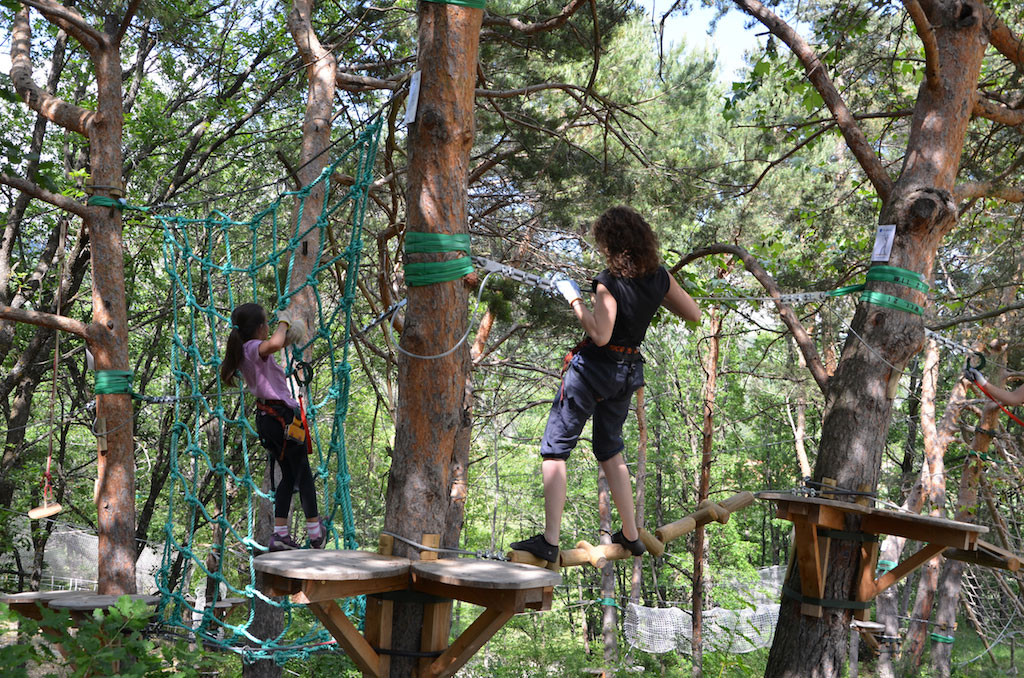
Afternoon: a high ropes adventure course, with different levels so that everyone can take part at their own pace. It is a good starting point — familiar enough to feel comfortable, but still engaging, with plenty of small challenges along the way.
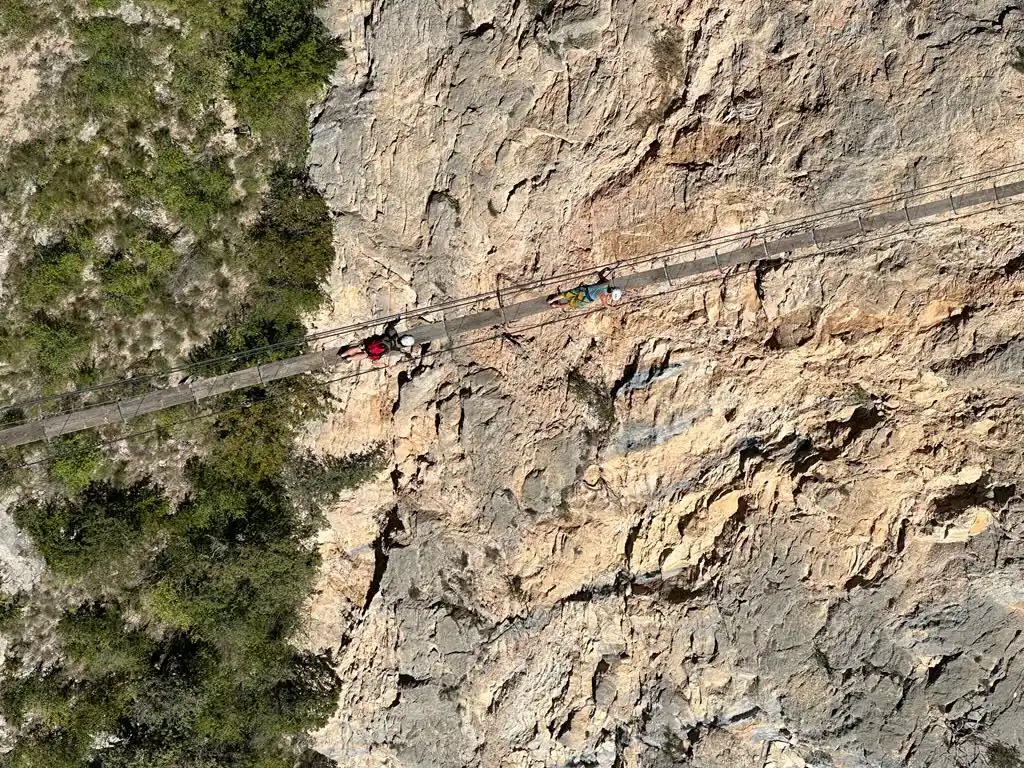
Morning: The day naturally splits. Those keen on heights head off to meet their via ferrata guide, while others set off from a nearby hire shop for a mountain bike ride through forest tracks and quiet backroads.
The timings and locations are arranged so that both activities run smoothly without complication, and the family can regroup easily afterwards.
They meet again at lunch, usually with a mix of stories — some about exposed sections on the rock, others about fast descents and shaded trails.
Afternoon: a free afternoon by the lake. Time to swim, lie in the sun, hire a pedalo or simply do very little.
Evening: a visit to a local evening market, with a mix of food stalls, small producers and informal entertainment, followed by dinner in a nearby village.
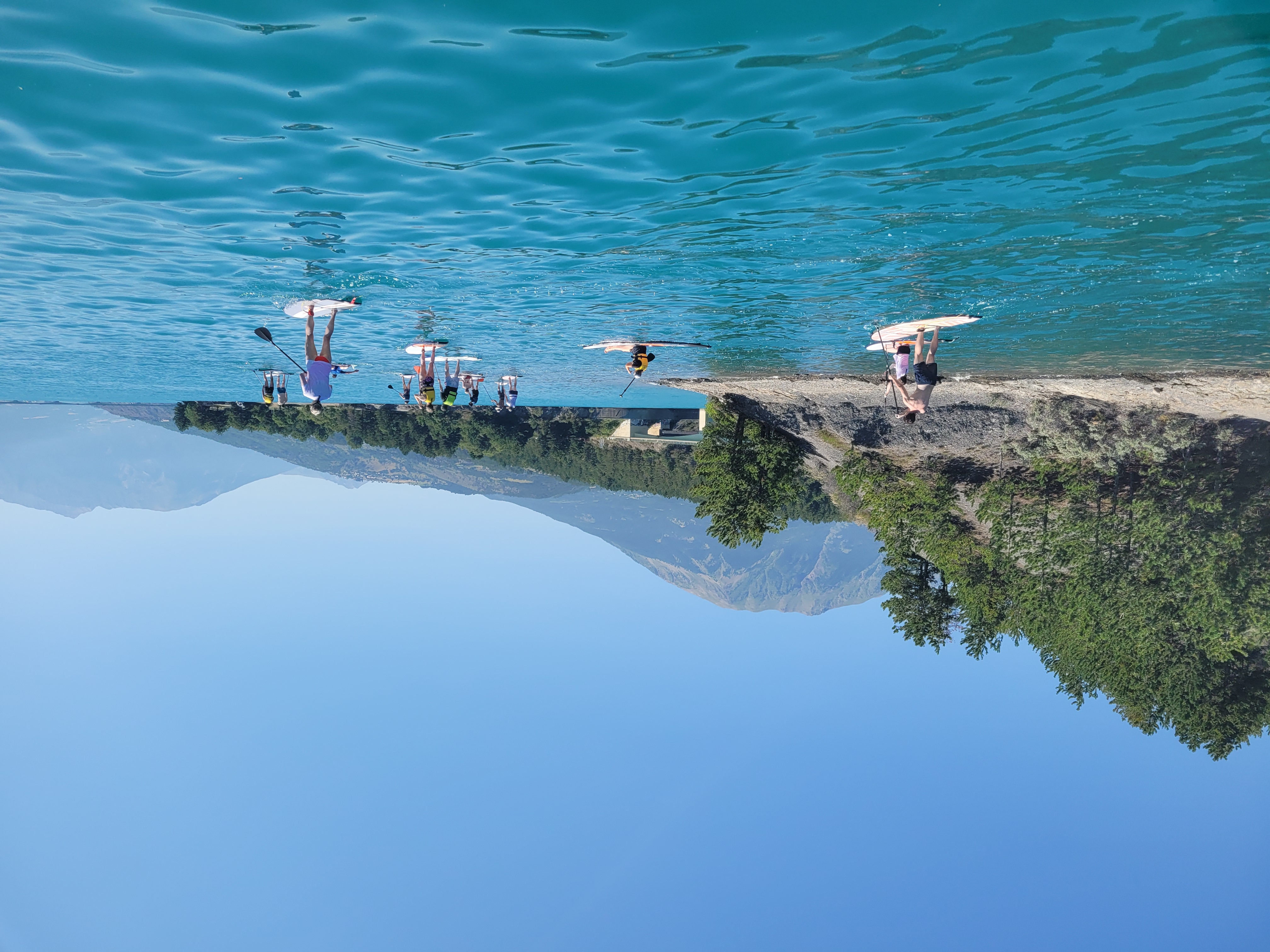
Morning: A relaxed start by the lake, with paddle boarding for the whole family. Calm water, clear views across the mountains and time to get comfortable on the boards make this an easy, sociable activity.
Lunch at a lakeside restaurant, often simple food with views across the water.
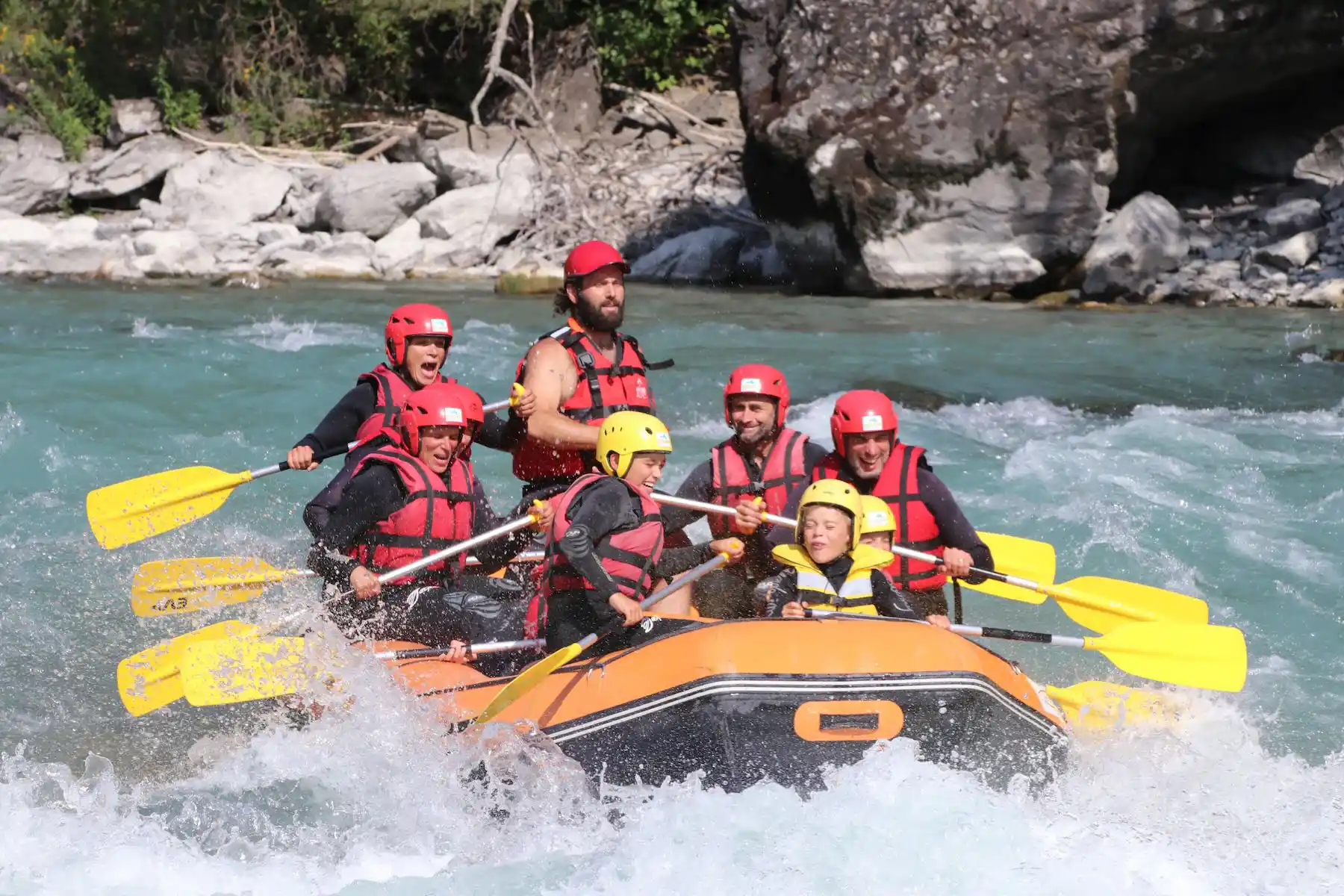
Afternoon: The family splits again. Some stay by the lake — swimming, reading or finding a shady spot — while others head a short distance upstream for a rafting session.
The change in pace is noticeable: working together through gentle rapids, learning how to read the river and, inevitably, getting soaked along the way.
The day is planned so that these transitions are straightforward, with short distances between locations and time to regroup afterwards.
Evening: back to the lake for pizza by the water, often with live music or a simple fireworks display as the light fades.
A change of pace.
The family sets off on a walk into the mountains, leaving the valley behind. The route is steady rather than technical, with time to stop, take in the views and enjoy the sense of moving away from roads and villages.
Arrival at a mountain refuge in the afternoon.
The evening is simple: a shared meal, time outdoors as the light fades, and a quieter atmosphere. With little or no phone signal, the evening tends to revolve around conversation, cards and time together in a way that rarely happens at home.
For many families, this becomes one of the most memorable parts of the week.
.webp)
Morning: Walk back down from the refuge, often seeing the landscape differently after a night in the mountains.
Afternoon: A deliberately easier afternoon. Back at the lake, there is time to swim, relax or simply sit by the water without needing to do anything.
Evening: Dad and the middle child head out for a guided fly fishing session, making the most of the cooler evening light and quieter rivers. The rest of the family might stay local, wander into a nearby village or find somewhere simple to eat.
Morning: A slower start, with time to visit a local market. Stalls selling fruit, cheeses, bread and regional specialities give a glimpse of everyday life in the area — an easy, informal way to experience something beyond the activities.
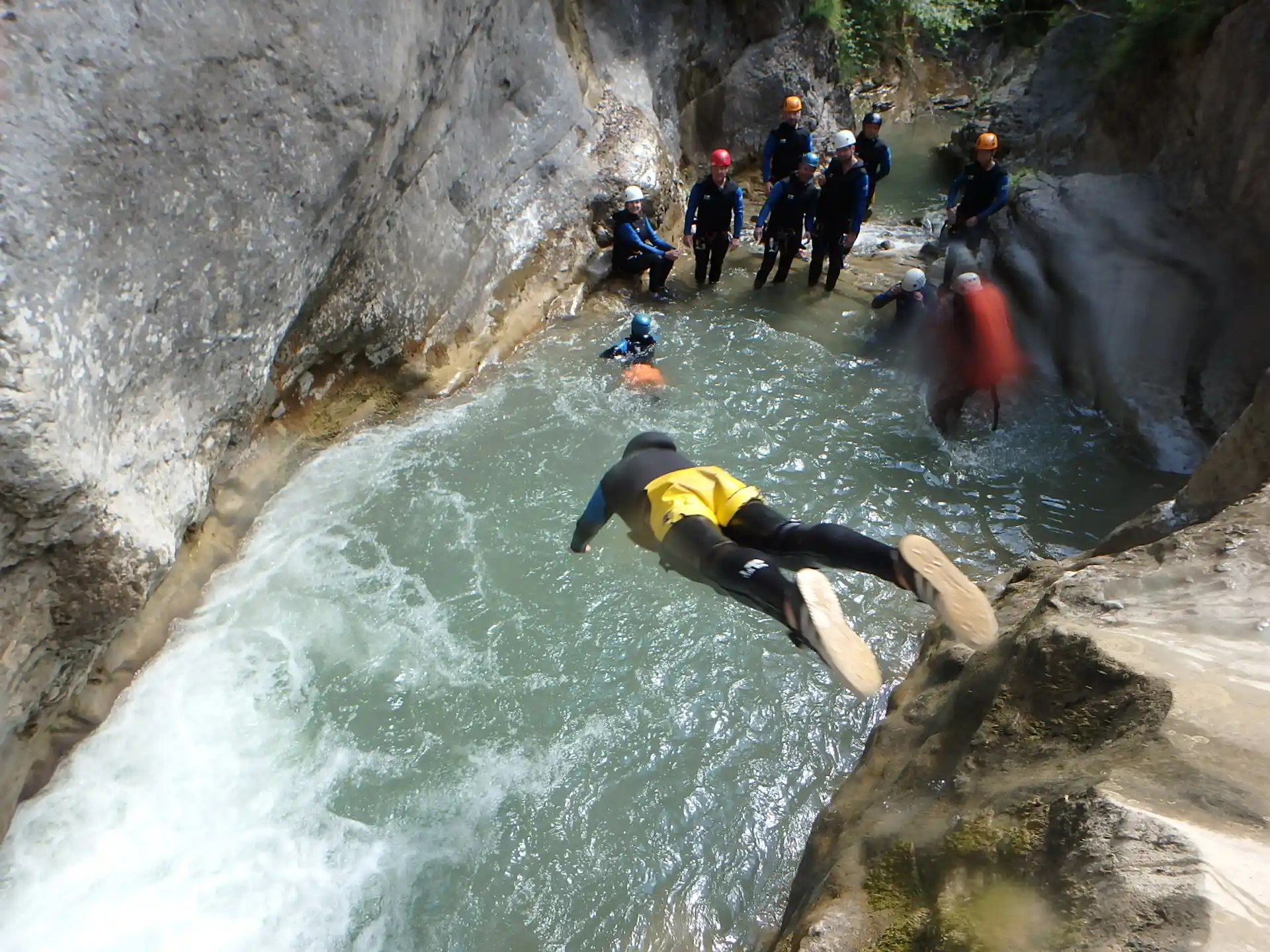
Afternoon: canyoning.
The final activity is often something a little more adventurous. Moving down a mountain gorge involves a mix of walking, sliding, scrambling and optional jumps into clear pools. It is playful rather than technical, with different options depending on confidence.
By this stage in the week, most families feel more comfortable trying something new, and this often becomes a highlight.
A straightforward departure after a relaxed breakfast.
A typical week is planned in advance, but not rigid.
Your organised activities form the framework of the week. These are scheduled at specific times and, once confirmed, are not usually changed, as guides and providers are booked in advance.
Around those activity times, however, there is plenty of space.
There is usually:
The aim is to create a rhythm that feels balanced rather than busy — with enough structure to make everything run smoothly, but enough freedom to enjoy the surroundings without feeling managed.
If conditions change, for example due to weather, the local team may adjust the order of activities or suggest alternatives where needed. This is part of ensuring the week runs well in practice.
Outside of the organised activities, the rest of the time is your own. You might follow local suggestions — a lake, a walk, a market or a restaurant — or simply take the opportunity to slow down.
.jpg)
No — the self-drive element is there to give you freedom, not to turn the holiday into a road trip.
When the itinerary is created, activities are planned with geography in mind. The aim is to keep journeys purposeful and manageable, so you are not crossing the region unnecessarily or spending large parts of the day in the car.
Some activities may involve a slightly longer journey, but these are included because they are worth doing. Where possible, the itinerary is shaped so that these drives make sense, with suggestions for places to stop, swim, eat or visit along the way.
Driving in the Southern French Alps is also not quite the same as driving at home. The roads often pass through open valleys, mountain villages, lakeside routes and high alpine scenery. With a bit of music, some conversation and time to talk about the day’s activities, the journey can become part of the holiday rather than just a transfer.
Activities are grouped sensibly, and local suggestions are built around where you already are. That might mean a lakeside lunch after paddleboarding, a village market near your evening plans, or a good swimming spot close to an activity.
Because you have your own vehicle, you also have the freedom to make small decisions as you go — stopping somewhere you like, staying longer by the lake, or heading back earlier if everyone is tired.
In practice, the driving supports the independence of the holiday. It gives you access to more varied places and activities, while the planning keeps it from becoming a logistical burden.
Not always.
Some activities are done together, particularly those that work well for mixed ages. Others can be adapted so that different members of the family choose different options on the same day.
There is also an element of compromise. It is common for someone to try something they were unsure about, often because the rest of the family are doing it — and these moments frequently become highlights.
Often, the activities people were least certain about beforehand become the ones they talk about most afterwards.
.jpg)
The success of the week comes down to balance.
The organised activities give the holiday shape, but they are only one part of it. What makes the difference is how everything fits together: the order of the activities, the amount of downtime, the driving distances, the local suggestions and the space for different family members to enjoy different things.
A good week is not simply the one with the most activities. It is the one where the pace feels right, the logistics feel easy, and everyone has had something that mattered to them.
When those elements come together, the result is a holiday that feels active, varied and manageable — rather than rushed or overly structured.
A tailor-made family activity holiday in the Alps is not about following a fixed programme or filling every moment.
It sits somewhere between an independent holiday and a fully organised week. You have your own accommodation, your own vehicle and time that feels like yours, but the more complex parts — choosing reliable providers, planning the order of activities and making everything work logistically — have already been taken care of.
That is what gives the week its rhythm: enough structure to make things easy, enough flexibility to feel relaxed, and enough local knowledge to help you make the most of where you are.
For many families, that balance is what makes the holiday work so well — it feels genuinely your own, but without the time and effort of organising everything yourself.
Your main activities are chosen in advance, and these form the structure of the week. This ensures availability and allows the itinerary to be planned properly.
Around those activities, there is plenty of flexibility. You are given suggestions for places to visit, eat or explore, but how you use that time is entirely up to you.
The local team monitors conditions throughout the week. If necessary, the order of activities can be adjusted or alternatives suggested to make the most of the conditions.
The aim is to keep the overall structure of the week intact, while adapting where needed so that the experience still works well.
Yes — this is one of the main advantages of a tailor-made activity holiday.
Activities can be chosen to reflect different interests, and it is often possible for family members to do different things on the same day. A well-planned week allows for both shared experiences and individual preferences.
You do need to be generally active to enjoy most family activity holidays, but you do not need to be an endurance athlete.
There are activities suited to a range of fitness levels and experience — from more relaxed options to more demanding ones. The key is choosing the right mix for your family.
A well-designed itinerary allows less active members to take part comfortably, while those looking for more challenge can include activities that suit them.
No — the holiday is centred around your family.
For some activities, you may join others of a similar level or age group, particularly where it makes sense logistically. This is usually a positive part of the experience, especially for children and teenagers.
You do need to be generally active to enjoy most family activity holidays, but you do not need to be an endurance athlete.
There are activities suited to a range of fitness levels and experience — from more relaxed options to more demanding ones. The key is choosing the right mix for your family.
A well-designed itinerary allows less active members to take part comfortably, while those looking for more challenge can include activities that suit them.
No — the holiday is centred around your family.
For some activities, you may join others of a similar level or age group, particularly where it makes sense logistically. This is usually a positive part of the experience, especially for children and teenagers.
Staying overnight in a mountain refuge is one of the experiences that makes a winter journey through
Read More
When you picture a winter holiday in the French Alps, downhill skiing is probably one of the first t
Read More
When most people picture a walking holiday in the French Alps, they probably think of summer. The hi
Read More
The Alps have a way of making you feel very small, in the best possible way. From snow-covered peaks
Read More
0 comments
Submit a comment