
Snowshoeing or Cross-Country Skiing? Two Very Different Ways to Enjoy Winter
Snowshoeing and cross-country skiing offer two quite different ways to enjoy the Alps in winte
Read MorePosted 16-11-2026 by Lea Papillon
Cross-country skiing offers a rather different way to experience the Alps in winter. Instead of taking ski lifts up the mountain and skiing back down, you travel under your own power along prepared trails, through forests, across open valleys and through snowy mountain landscapes.
It's an activity that combines being outdoors with the satisfaction of learning a new skill. Once you've developed the basic technique, there's a particular pleasure in finding your rhythm and gliding across the snow. But if you've never tried cross-country skiing before, it's not always obvious what to expect.
Is it difficult to learn? Do you need previous skiing experience? How fit should you be? And what actually happens during your first lesson?
The good news is that cross-country skiing is accessible to complete beginners, including adults who have never put on skis before. You don't need to be a downhill skier to get started, although learning to balance, glide and control your speed does take some practice.
Drawing on our experience organising cross-country skiing holidays in the Southern French Alps, we'll explain how to get started, what to expect from your first lesson, what equipment you'll need and how to choose the right introduction to the sport.
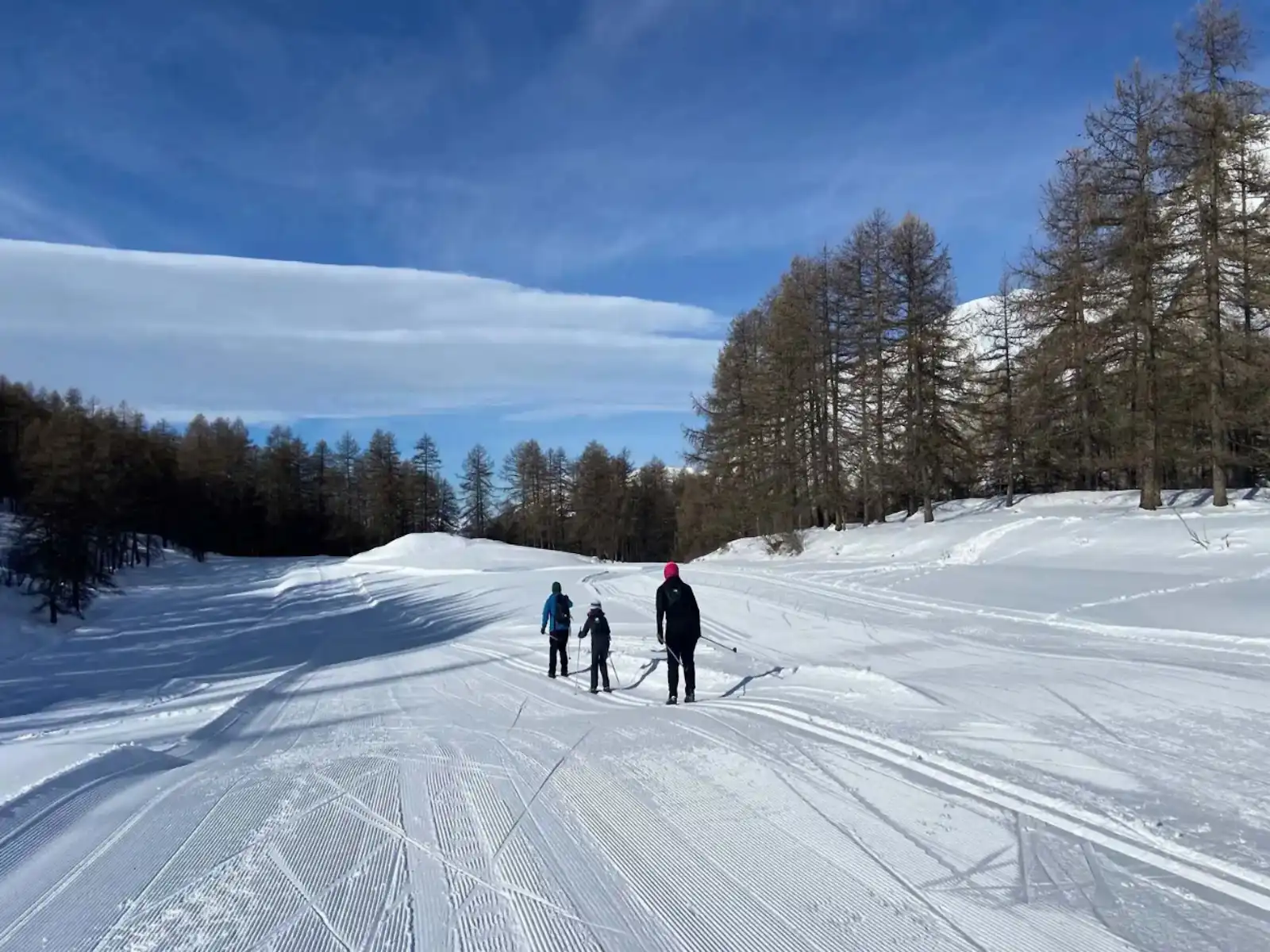
Yes. You don't need previous skiing experience to learn cross-country skiing, although it takes a little time to become comfortable with the movements.
Most beginners start with classic cross-country skiing, where you move forwards with your skis parallel, often following two tracks prepared in the snow. The movement initially resembles walking, but as your balance improves, you gradually learn to glide from one ski to the other.
The other main technique is skating, which uses a side-to-side movement similar to ice skating. It's generally more physically demanding and requires greater coordination, so classic skiing is usually the better starting point.
If you'd like to understand the differences in more detail, our guide to Nordic skiing and cross-country skiing explains the terminology and techniques.
Previous downhill skiing experience may help with confidence, but the equipment and movements are quite different. Cross-country skis are lighter and narrower, and your heels lift as you move. Unlike downhill skiing, you won't have the same rigid boots supporting your ankles.
An introductory lesson on gentle terrain is the best way to begin. A qualified instructor can help you develop the basic movements and learn to control your speed before you explore the trails.
Your first lesson will usually take place on gentle, relatively flat terrain. Rather than setting off along a trail immediately, you'll start by getting comfortable with the equipment and learning how to move on skis.
You won't be expected to glide confidently from the outset. The exercises are designed to introduce one movement at a time, giving you an opportunity to find your balance before combining the different elements of the technique.
You'll learn how to put your skis on and take them off, use your poles and move around comfortably. The flexible boots and bindings allow your heels to lift, which can feel unfamiliar at first. Your instructor may begin with simple exercises without poles, helping you find your balance before introducing more coordinated movements.
Most beginners start by walking on their skis before practising transferring their weight from one foot to the other.
As you become more comfortable, you'll extend each step into a glide and begin coordinating your arms and legs, using your poles to help propel yourself forwards.
One of the first challenges is learning to trust the glide rather than trying to walk continuously. It can feel unusual to balance briefly on one ski, but this is an important part of developing an efficient classic technique.
The aim is to develop a comfortable rhythm rather than move quickly.
Controlling your speed is an important part of learning, particularly on gentle descents that can feel surprisingly challenging at first.
Beginners are commonly taught the snowplough technique, where you bring the tips of your skis closer together and push the tails apart into a V shape. Applying pressure through the inside edges helps you slow down or stop.
You'll also practise maintaining a stable position, with slightly bent knees and your weight balanced over your feet. Keeping your weight centred is particularly useful when the skis begin to accelerate downhill.
On prepared classic tracks, you may need to lift your skis out of the grooves before using a snowplough, provided there's enough space to do so safely. Your instructor can show you how to do this and how to approach small descents.
The aim isn't to tackle difficult slopes, but to understand how your skis respond and feel more confident when the terrain changes.
After your lesson, you can practise on suitable beginner trails.
Some people prefer to stay close to the learning area, while others feel ready to explore further. There's no particular distance you need to cover.
It's worth choosing a short, straightforward route initially, especially if you're unfamiliar with the trail network. Remember that a route described as easy may still include gentle climbs and descents.
Your first session is about becoming familiar with the movements. Practising afterwards helps them gradually feel more natural.
.webp)
You can pick up the basics of classic cross-country skiing during your first session, and many beginners can begin exploring easy, prepared trails after an introduction.
Developing a smoother, more efficient technique takes longer. Initially, you may find yourself concentrating on every movement, whereas with practice, skiing becomes more natural and less tiring.
Over several days, you'll have time to improve your coordination, develop a comfortable rhythm and become more confident on varied terrain. You may also find you can travel further with less effort.
There's no fixed number of lessons needed. Progress depends on your coordination, confidence and opportunities to practise.
Importantly, you don't have to master cross-country skiing before you can enjoy it. Even your first outing can be rewarding.
It's natural to feel uncertain about balancing on skis for the first time. Falls can happen, particularly when turning or descending, but beginner cross-country skiing doesn't require high speeds or steep slopes.
One useful skill to learn is how to get up after a fall. Standing with long skis attached can be awkward until you know how to position them, so it's worth practising during your lesson.
If you do fall, your instructor can show you how to bring your skis into a position that makes standing easier. This is often more useful than trying to pull yourself upright while the skis are pointing in different directions.
Snow conditions also matter. Firm or icy tracks can feel faster and more slippery than softer snow, making it important to check conditions before setting off independently.
If you're apprehensive, stick to gentle terrain and give yourself time to practise. There's no need to attempt more demanding routes before you feel ready.
You don't need exceptional fitness to try cross-country skiing, but it does provide a full-body workout. Your legs generate much of the movement, while your arms, shoulders and core contribute to balance and propulsion.
For more information, see our article on the health benefits of cross-country skiing.
Beginners may find skiing surprisingly tiring because they're still learning to move efficiently. As your technique improves, you'll generally use less energy to cover the same distance.
Yes. For a first outing, you can choose a relatively flat route, ski at a comfortable pace and take breaks whenever you need them. A gentle session on easy trails is very different from a longer route with sustained climbs. You can adjust the challenge to suit your fitness without needing to cover a particular distance.
It's also worth remembering that cross-country skiing uses muscles differently from walking. Even people who are regularly active may notice some unfamiliar muscular effort during their first session.
If you regularly walk, cycle, swim or enjoy other aerobic activities, you'll already have a useful foundation. An introductory session generally doesn't require specific preparation beyond being comfortable with moderate exercise.
For several consecutive days of skiing, building endurance beforehand can help. Walking on hills, cycling and swimming are all useful, while simple leg-strengthening exercises can improve muscular stamina.
If you're preparing for a dedicated skiing holiday, aim for regular activity rather than a sudden increase in exercise just before departure. Consistent preparation is more useful than a few unusually demanding sessions.
Nordic trails are shared by skiers of different abilities. Understanding a few basic rules helps protect the prepared tracks and makes the experience more enjoyable for everyone.
Classic cross-country skiing usually takes place in two parallel grooves prepared in the snow. Avoid walking or snowshoeing in these tracks unless the route is specifically designated for those activities, as footprints can damage the surface and make skiing more difficult.
Where there's a separate skating lane, keep to the area intended for your technique. If you need to remove your skis or stop for a break, move away from the prepared tracks where possible.
Allow faster skiers room to overtake when it's safe, and avoid stopping on descents or blind bends, where approaching skiers may have limited time to react.
Nordic areas have marked routes of different difficulties, sometimes with a designated direction of travel.
Follow local signs, respect closures and check which trails are open before setting off. Conditions can change throughout the winter. Trail grading is also worth paying attention to. A route suitable for an experienced skier may include descents that feel challenging to someone still learning to control their speed.
You don't need to know every detail of trail etiquette before your first lesson, but these basic habits will help you ski considerately.
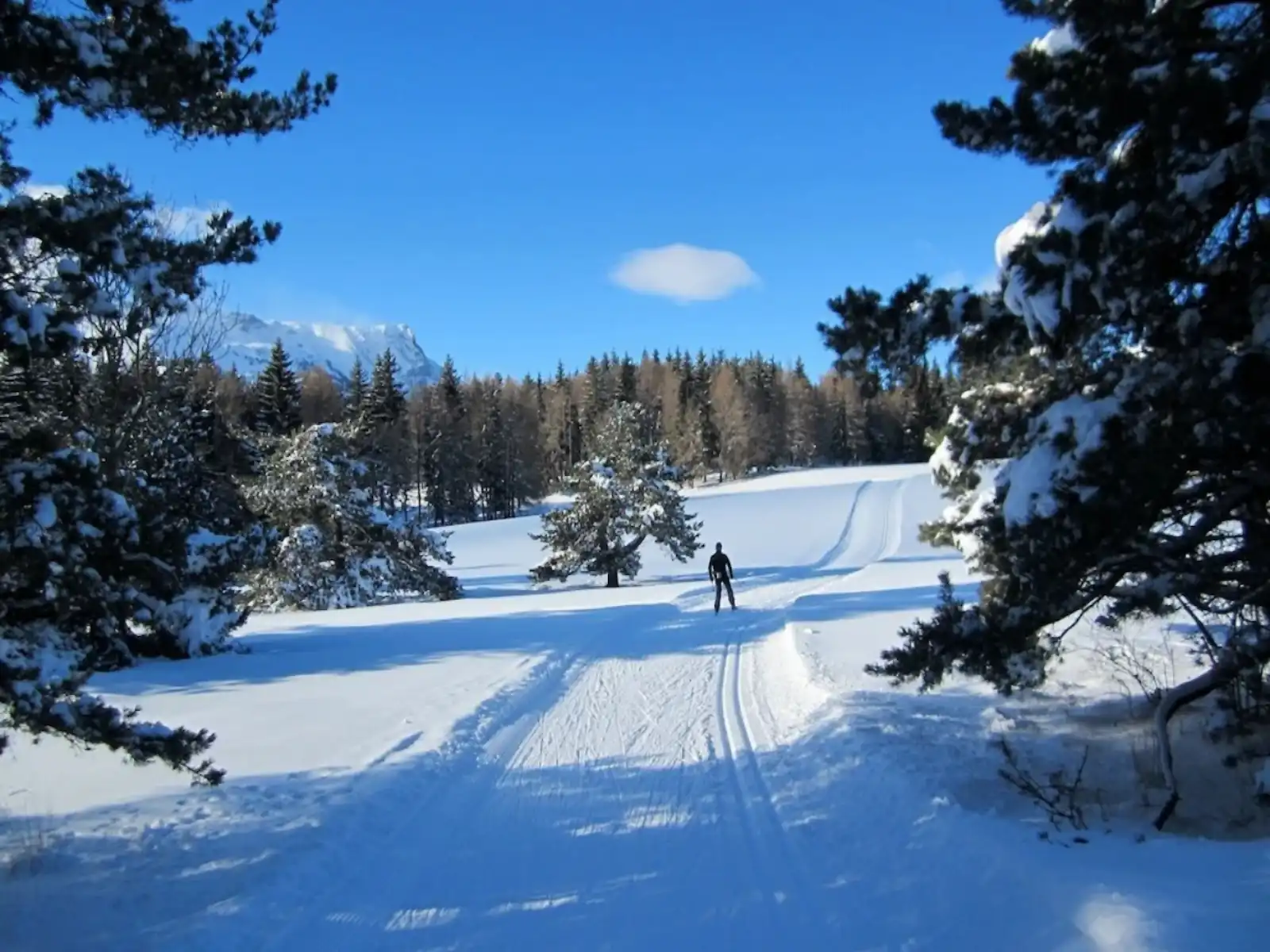
You don't need lots of specialist clothing to try cross-country skiing. If you already have suitable clothes for winter walking or other outdoor activities, you'll probably have much of what you need.
Because cross-country skiing generates plenty of body heat, lightweight, breathable layers are generally more comfortable than the thick, insulated clothing worn for downhill skiing.
Breathable base layer: Merino wool or synthetic fabric that wicks moisture away from your skin.
Lightweight fleece: An insulating layer you can remove if you get too warm.
Wind-resistant jacket: Protection from wind and light snowfall without excessive insulation.
Comfortable trousers: Stretchy walking trousers or winter sports leggings that allow freedom of movement.
Gloves, hat and sunglasses: Choose gloves that allow you to grip your poles comfortably.
Avoid cotton next to your skin, as it retains moisture. A small rucksack is useful for carrying an extra warm layer.
For classic cross-country skiing, you'll need skis, boots and poles. The skis are lightweight and narrow, while the flexible boots attach at the toe, allowing your heels to lift as you move. You don't need to buy equipment before trying the sport. Nordic ski centres commonly offer equipment hire, with staff available to help you find the correct sizes.
Carry water, a snack, sun cream and a spare warm layer. Sunglasses are important because sunlight reflected off the snow can be strong, even on cold days.
If you're exploring independently, take a trail map or have access to local route information, along with a charged mobile phone.
For more detailed advice, check out our cross-country skiing kit list before your travel.
The Southern French Alps has several established Nordic skiing areas, with prepared trails through forests, across open plateaux and along mountain valleys. Many offer equipment hire, instruction and routes suitable for beginners.
Some areas worth considering include:
For your first outing, choose a centre with gentle trails and access to instruction. Check snow conditions, trail openings and equipment hire availability before travelling.
You can discover cross-country skiing during a single introductory session or spend several days developing your skills. The right choice depends on your experience and what you'd like to achieve.
A single session is a good way to discover the sport without committing to a full skiing holiday. You'll learn the basic movements, practise on gentle terrain and see whether you'd like to continue.
Cross-country skiing also fits naturally into a winter multi-activity holiday, where you can combine it with other winter experiences.
Several days give you more time to improve your technique, become confident on different terrain and explore longer trails.
Our beginner cross-country skiing short break offers a three-day introduction, combining instruction with opportunities to practise.
If you've already mastered the basics, our improver cross-country skiing holiday is designed for skiers who want to develop their technique and confidence on more varied terrain.
A single session suits those who are curious about the sport, while a dedicated break gives you more time to learn or progress.
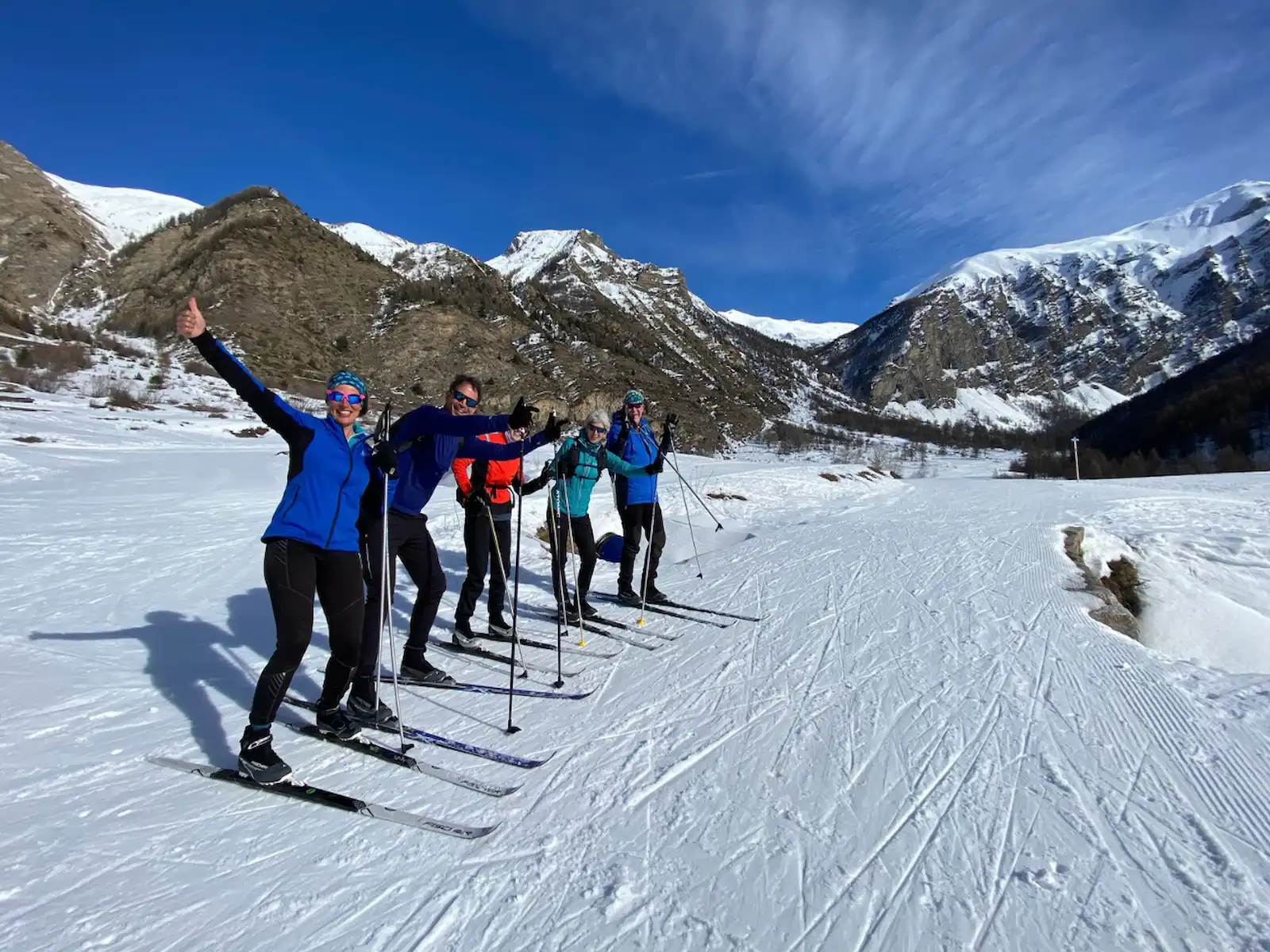
If you enjoy being active outdoors and are interested in learning a new winter sport, cross-country skiing is worth considering. It combines physical activity with the opportunity to explore the mountains at a pace that suits you.
You don't need previous skiing experience, but it's worth allowing time to become comfortable with the technique. An introductory lesson is a sensible first step, whether you want to try the sport for a day or develop your skills over several days in the Southern French Alps.
Snowshoeing and cross-country skiing offer two quite different ways to enjoy the Alps in winte
Read More
Staying overnight in a mountain refuge is one of the experiences that makes a winter journey through
Read More
When you picture a winter holiday in the French Alps, downhill skiing is probably one of the first t
Read More
When most people picture a walking holiday in the French Alps, they probably think of summer. The hi
Read More
0 comments
Submit a comment