
Staying in a Mountain Refuge in Winter: What to Expect
Staying overnight in a mountain refuge is one of the experiences that makes a winter journey through
Read MorePosted 02-11-2026 by Lea Papillon
Snowshoeing and cross-country skiing are two very different ways to explore the Alps in winter. Both take you beyond the downhill ski slopes, but the movement, terrain and experience are quite different.
If you enjoy walking and want to explore snowy mountain landscapes without learning a completely new sport, snowshoeing is probably the more natural starting point. If you enjoy learning a new skill and like the idea of gliding along prepared trails, cross-country skiing may appeal more.
Neither activity is necessarily easier physically. A gentle snowshoe walk can be less demanding than a challenging cross-country ski route, while a steep climb through deep snow can make snowshoeing surprisingly strenuous.
The more useful question is which activity would suit the way you like to spend your time outdoors.
Drawing on our experience organising winter holidays in the Southern French Alps, we'll compare the two activities in practical terms, including how they feel, what fitness and skills they require, and the types of terrain you can explore. We'll also look at whether trying both on the same holiday might be the best option.
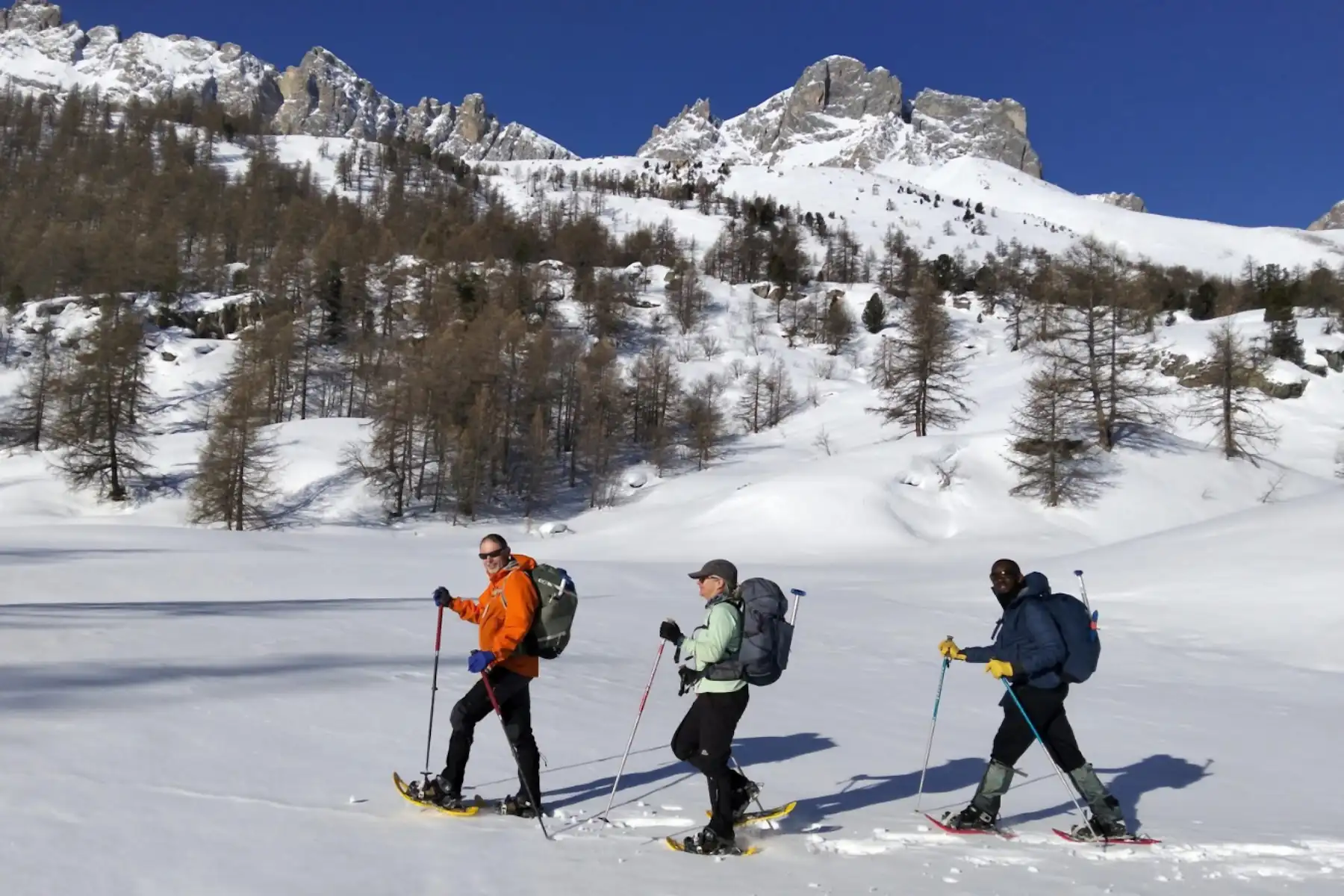
The main difference is how you move across the snow and where you can go.
Snowshoeing is essentially winter walking. Snowshoes attach to your boots and spread your weight over a larger surface area, helping you move across soft snow without sinking as deeply. The movement is familiar to anyone who walks regularly, although slopes and different snow conditions require some adjustment.
Cross-country skiing is about striding and gliding. You travel on lightweight skis, using your legs and poles to propel yourself forwards along the snow.
Beyond the movement itself, there are a few practical differences worth knowing:
Learning curve: Snowshoeing is generally quicker for beginners to pick up, while cross-country skiing requires more practice to develop balance and coordination.
Terrain: Snowshoeing allows you to explore suitable snowy paths and unprepared terrain, whereas recreational cross-country skiing mainly takes place on prepared Nordic ski trails.
Equipment: For snowshoeing, you'll need snowshoes, suitable winter boots and poles. Cross-country skiing requires specialised skis, boots and poles.
The experience: Snowshoeing is more about exploring the landscape at walking pace, while cross-country skiing offers the satisfaction of finding a rhythm and gliding across the snow.
For this comparison, we're mainly referring to classic cross-country skiing, which is generally the more accessible starting point for beginners. If you'd like to understand the difference between classic and skating techniques, see our guide to cross-country skiing.
If you're considering trying snowshoeing, it's also worth knowing what clothing and equipment you'll need. Our guide to what to wear for snowshoeing in the Alps covers the essentials, including how to dress for changing winter conditions.
Although both activities allow you to explore the Alps in winter, they feel quite different once you're out on the snow. Snowshoeing is closer to mountain walking, while cross-country skiing introduces the sensation of gliding and the challenge of developing a new skill.
If you already enjoy walking in the mountains, snowshoeing will feel familiar quite quickly. The movement is much the same as walking, although the snowshoes take a little getting used to, particularly on slopes or in softer snow.
The pace allows you to take in your surroundings. In the Southern French Alps, you might follow a route through quiet larch forests, cross snow-covered meadows or gradually climb towards more open mountain terrain. In places such as the Champsaur Valley, the changing landscape is an important part of the experience.
There's time to stop, notice animal tracks in the snow, appreciate the winter landscape and enjoy being away from the busier ski areas. For many walkers, that's precisely the appeal: the opportunity to experience familiar mountain activities in a completely different season.
Alyson, who joined one of our guided snowshoeing holidays in the Champsaur Valley, described the variety of landscapes:
“The snowshoeing walks took us over varied terrain in different parts of the Champsaur Valley - larch forests, plateaus, snowy bowls surrounded by mountains, with options, for those who wanted, to go on further to ridges and summits.”
Having a knowledgeable local guide can add another dimension to the experience, particularly when it comes to choosing routes suited to the conditions and learning about the wildlife and landscapes along the way.
Cross-country skiing feels quite different from walking. Instead of lifting your feet with each step, you transfer your weight between skis and glide forwards across the snow.
At first, the movement can feel unfamiliar, but there's a particular satisfaction in beginning to glide rather than simply stepping forwards.
One of the most enjoyable aspects of cross-country skiing is this sense of progression. A movement that felt awkward on your first morning can become noticeably smoother with practice. You begin to find a rhythm, using your legs and poles together to travel more efficiently along the trails.
The experience is also closely connected to the landscape. Nordic ski trails in the Southern French Alps pass through forests, open valleys and mountain scenery, offering a quieter alternative to the downhill ski slopes.
Where snowshoeing encourages you to explore at walking pace, cross-country skiing brings an additional pleasure: the feeling of moving smoothly across the snow under your own power.
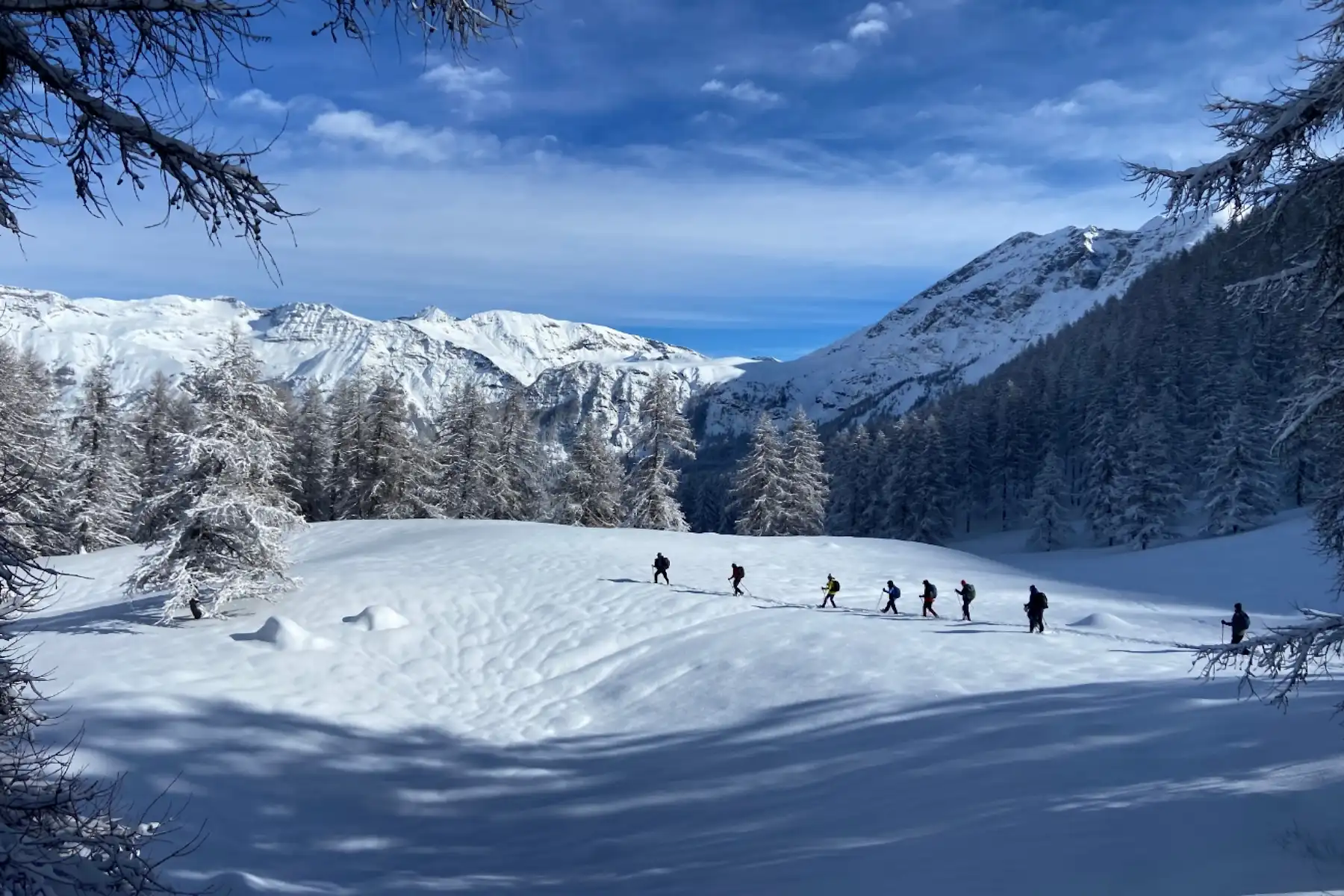
Snowshoeing is generally easier for beginners to pick up, particularly if you're already comfortable walking on uneven terrain.
Most people can become familiar with the basic movement relatively quickly. There's still technique involved, especially on slopes or in changing snow conditions, but you don't need to master a new way of moving before you can enjoy an introductory outing. If you're considering giving it a try, our snowshoeing tips for beginners offer practical advice to help you get started.
Cross-country skiing takes longer to learn because balance, timing and coordination all play a part. Beginners need to become comfortable gliding on skis, controlling their speed and negotiating descents.
A lesson is a sensible starting point. You don't need previous downhill skiing experience, but it's worth allowing time to practise rather than expecting to feel confident immediately.
Our advice: If you'd prefer to concentrate on exploring the mountains from the outset, start with snowshoeing. If you enjoy learning a sport and seeing your technique improve, cross-country skiing is well worth considering.
Neither activity is automatically harder. The level of effort depends on the route, snow conditions, pace and your own fitness.
Snowshoeing uses many of the same muscles as hill walking, but soft snow can make each step more demanding. Climbing through fresh snow requires considerably more effort than following a compacted track.
Cross-country skiing uses both the upper and lower body. On gentle trails, an efficient technique allows you to glide between strides, but longer climbs or a faster pace can make it a demanding cardiovascular workout. If you're interested in the exercise benefits, we've explored these further in our guide to the health benefits of cross-country skiing.
For someone who regularly walks in the hills, snowshoeing may feel more familiar physically. Cross-country skiing can initially feel tiring because you're using new movements and working on your technique.
When choosing a holiday, look at the actual level of the itinerary rather than assuming one sport will be easier than the other. Distance, ascent, terrain and the number of consecutive activity days all matter.
If you're considering a snowshoeing holiday, our fitness preparation guide for the over 50s offers practical advice.
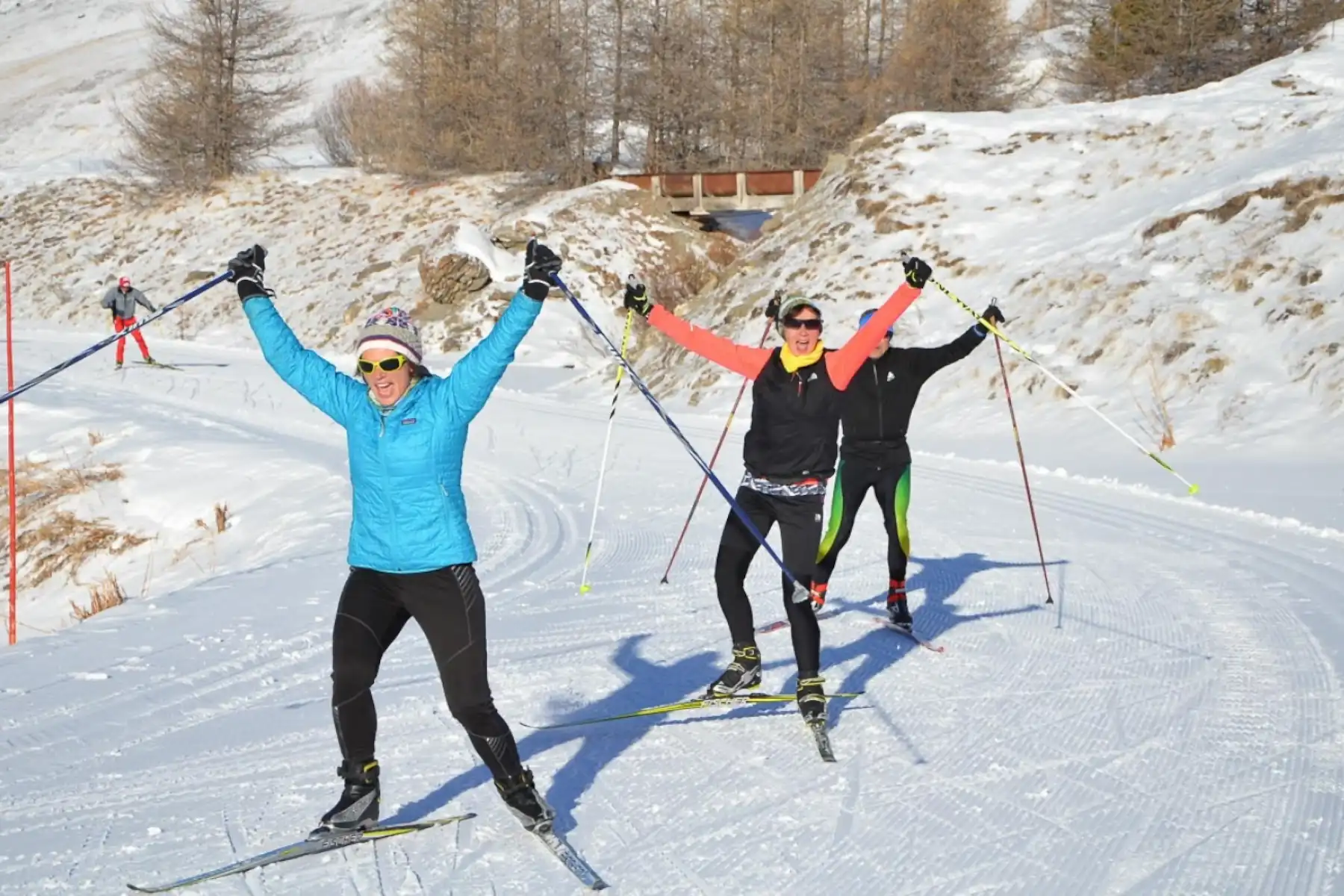
Not usually. Although both activities take place in the winter mountains, they are generally suited to different terrain.
Snowshoeing gives you access to suitable winter walking routes that don't require prepared ski tracks.
On our guided snowshoeing holidays in the Southern French Alps, we explore areas such as the Champoléon Valley, where routes can lead through woodland towards open plateaux such as La Coche. Around Saint-Léger-les-Mélèzes in the Champsaur Valley, there are opportunities to walk through larch forests and, when conditions permit, reach more open terrain.
The exact route matters. Snow conditions, weather, avalanche risk and the abilities of the group all influence where it's appropriate to go.
This is one of the reasons we value working with experienced local mountain guides. Their knowledge helps them choose suitable routes and adapt plans to the conditions, rather than simply following a fixed itinerary regardless of the weather.
Recreational cross-country skiing usually takes place on maintained Nordic trails. These are prepared to provide a suitable surface for skiing, with routes of varying lengths and difficulty.
In the Southern French Alps, Nordic ski areas around the Queyras, Crévoux and Guillestre offer different settings for exploring the mountains on skis. Our cross-country skiing holidays offer opportunities to experience this varied terrain, with options for different levels of skiing experience.
Following prepared trails doesn't mean the experience is limited to busy resorts. Many Nordic routes pass through woodland and open countryside, away from the downhill ski slopes.
The advantage is that you can concentrate on your skiing technique while following a route suited to your ability.
It's also worth knowing that snowshoe walkers should avoid walking in the parallel tracks prepared for classic skiing. Some Nordic areas have separate snowshoe routes, and local access arrangements should always be respected.
The practical difference: Snowshoeing offers more flexibility to explore suitable unprepared terrain, while cross-country skiing allows you to develop a rhythm and cover ground on purpose-built trails. Neither is inherently better; they simply offer different ways to experience the mountains.
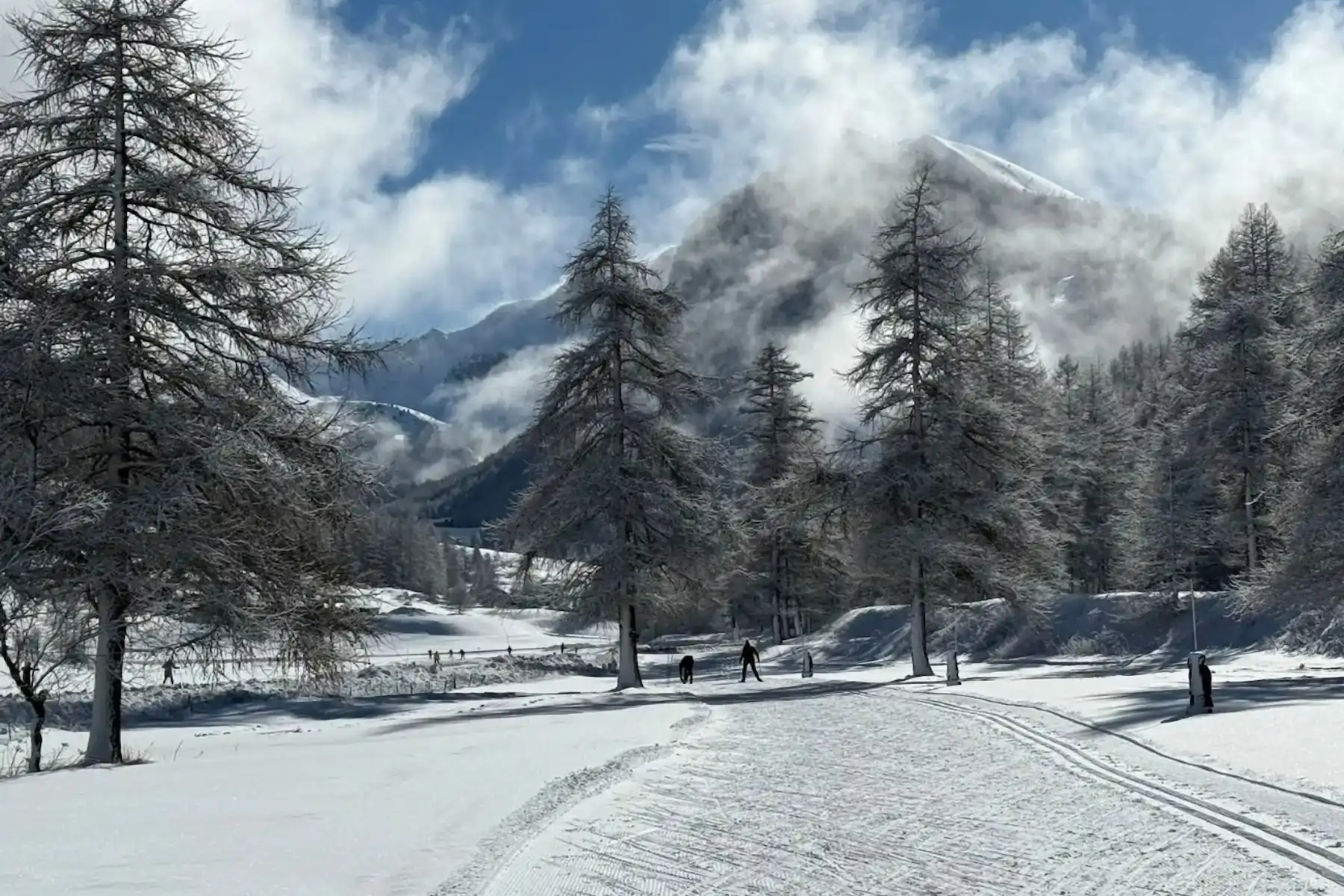
Choosing between the two isn't always straightforward, particularly if you haven't tried either before. Both offer an active winter holiday away from the downhill ski slopes, but what you find most enjoyable may not be obvious until you've experienced them.
It can help to think about what you usually value most on an active holiday. Do you prefer an activity you can settle into fairly quickly, or do you enjoy spending time developing a new skill? Are you happiest with a flexible day exploring the mountains, or do you prefer an activity with a more structured approach?
There's no right answer, and you don't need to fit neatly into one category. Your previous experience, confidence and personal interests are all worth considering when choosing a holiday.
Snowshoeing will generally feel more familiar because your feet aren't designed to slide. However, icy surfaces, uneven snow and slopes still require care.
Cross-country skiing involves learning to balance and control your movement on skis, including on descents. Falls can be part of the learning process, so appropriate instruction and beginner-friendly terrain are important.
If balance is a significant concern, a gentle introductory snowshoe walk may be the more comfortable place to start.
There's no particular age at which you need to rule out either activity. We regularly hear from active travellers who are interested in trying winter mountain activities for the first time later in life.
Your current fitness, mobility and interests are more useful considerations than your age alone.
If you already enjoy regular walking holidays, snowshoeing may feel like a natural progression. If you're interested in learning a new skill, cross-country skiing remains a realistic option, even without previous skiing experience.
The important thing is to choose an appropriate level of holiday and be realistic about the amount of activity involved.
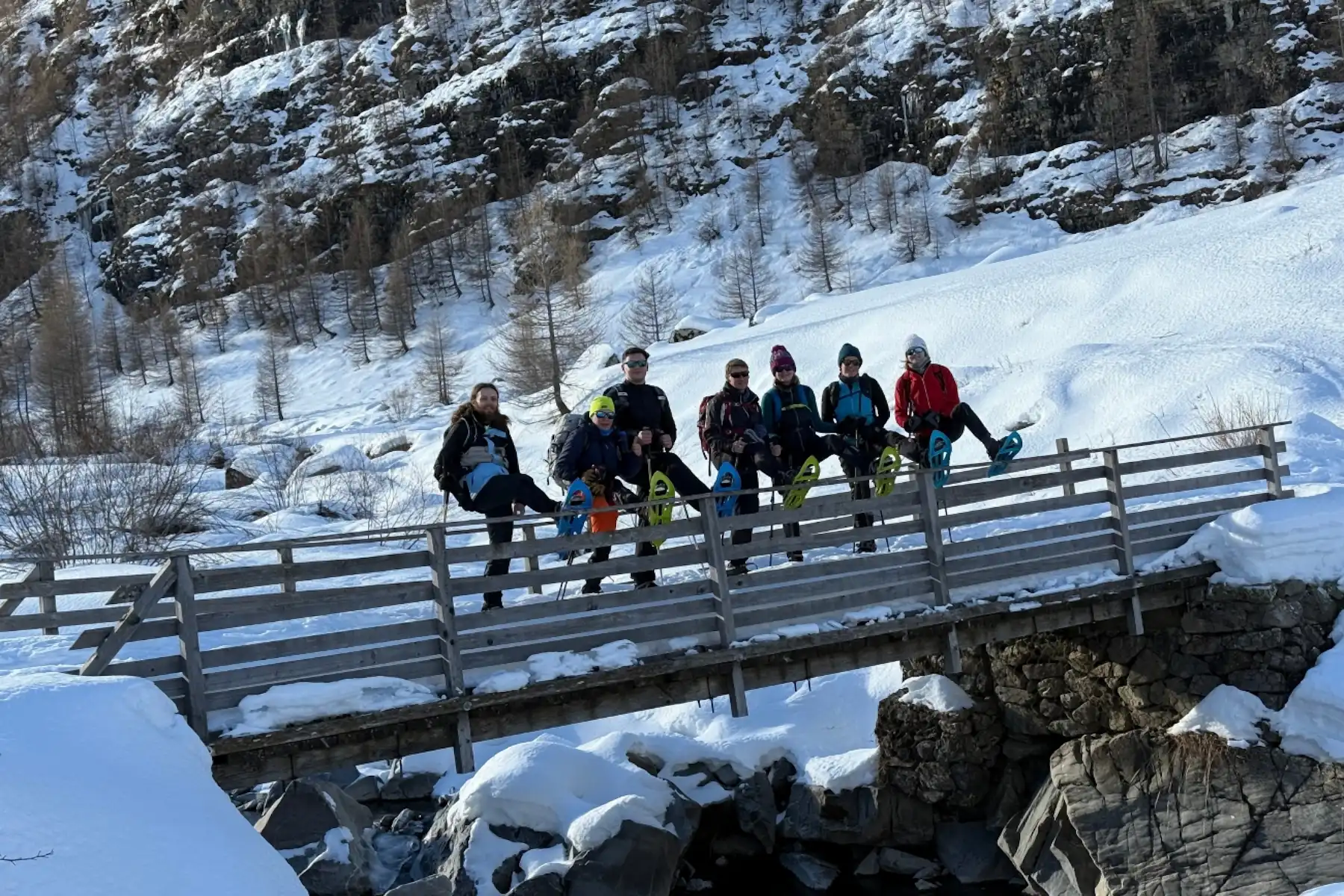
If both activities appeal to you, you don't necessarily have to choose between them.
Trying snowshoeing and cross-country skiing on the same holiday is a good way to discover which you enjoy most. You might find that you prefer the familiar movement and flexibility of snowshoeing, or that you particularly enjoy the challenge of learning to glide on skis.
Combining the two also adds variety to a winter holiday, with opportunities to experience different terrain and develop different skills.
At Undiscovered Mountains, ourwinter multi-activity holiday in the Alps gives you the opportunity to experience both snowshoeing and cross-country skiing, without having to commit to just one activity.
It's a practical option if you're curious about both sports, particularly if you're new to winter mountain holidays.
If you enjoy walking and want to explore snowy mountain landscapes at a familiar pace, snowshoeing is a natural place to start. If you like learning new skills and the idea of gliding along prepared trails appeals to you, cross-country skiing may be more rewarding.
Neither activity is necessarily easier physically, and both can be adapted to different levels of experience. The important thing is to choose a holiday that matches your fitness, interests and expectations.
And if you're still unsure, you don't have to decide in advance. Trying both on a winter multi-activity holiday can be an enjoyable way to discover which suits you best.
Staying overnight in a mountain refuge is one of the experiences that makes a winter journey through
Read More
When you picture a winter holiday in the French Alps, downhill skiing is probably one of the first t
Read More
When most people picture a walking holiday in the French Alps, they probably think of summer. The hi
Read More
The Alps have a way of making you feel very small, in the best possible way. From snow-covered peaks
Read More
0 comments
Submit a comment