
The French Alps for Non-Skiers: What Can You Actually Do in Winter?
When you picture a winter holiday in the French Alps, downhill skiing is probably one of the first t
Read MorePosted 19-10-2026 by Lea Papillon
Staying overnight in a mountain refuge is one of the experiences that makes a winter journey through the Alps quite different from a conventional winter holiday. After travelling on snowshoes or skis, you arrive somewhere that may be several hours from the nearest road and settle in for the night with everything you need around you.
But if you have never stayed in a mountain refuge in winter before, it can be difficult to know what that actually means.
Will there be a hot shower? Is there drinking water? Will the bedrooms be heated? Can you charge your phone? Do you need a sleeping bag? And what happens to all those wet boots, gloves and layers?
The first thing to understand is that there is no standard mountain refuge. A staffed refuge can offer hot meals, heating and surprisingly comfortable facilities, while an unguarded winter refuge may provide little more than shelter and somewhere to sleep. Even two guarded refuges on the same journey can be quite different.
Winter adds another dimension. Water can freeze, electricity may be limited and getting food, fuel and other supplies into the mountains is more complicated than it is in the valley.
Understanding a few of these practicalities makes it much easier to know what to expect from your first winter refuge stay.
This is the most useful distinction to understand before looking at individual facilities.
A guarded refuge has a refuge guardian — or gardien in France — and usually a small team in residence. They run the refuge, prepare meals, clean and maintain the building and organise the day-to-day logistics involved in accommodating people in the mountains.
For an overnight guest, this generally means arriving somewhere that is functioning as accommodation: there will be a place to sleep, meals are usually provided and there may be drinks and other refreshments available.
An unguarded winter refuge is a different proposition. Some mountain refuges close their main building outside their principal season but leave a smaller winter room accessible to mountaineers, ski tourers and other winter visitors.
These can be very basic. You may find mattresses and blankets, a table and perhaps a stove or simple cooking facilities, but there may be no running water, electricity or heating. There is no guardian there to prepare meals, clean up or organise the refuge for you.
The same refuge can also operate differently at different points in the winter. It may be guarded for part of the season and unguarded outside those dates, so the experience can change considerably without the building itself changing.
With that distinction in mind, here is what the main facilities are actually like in winter.
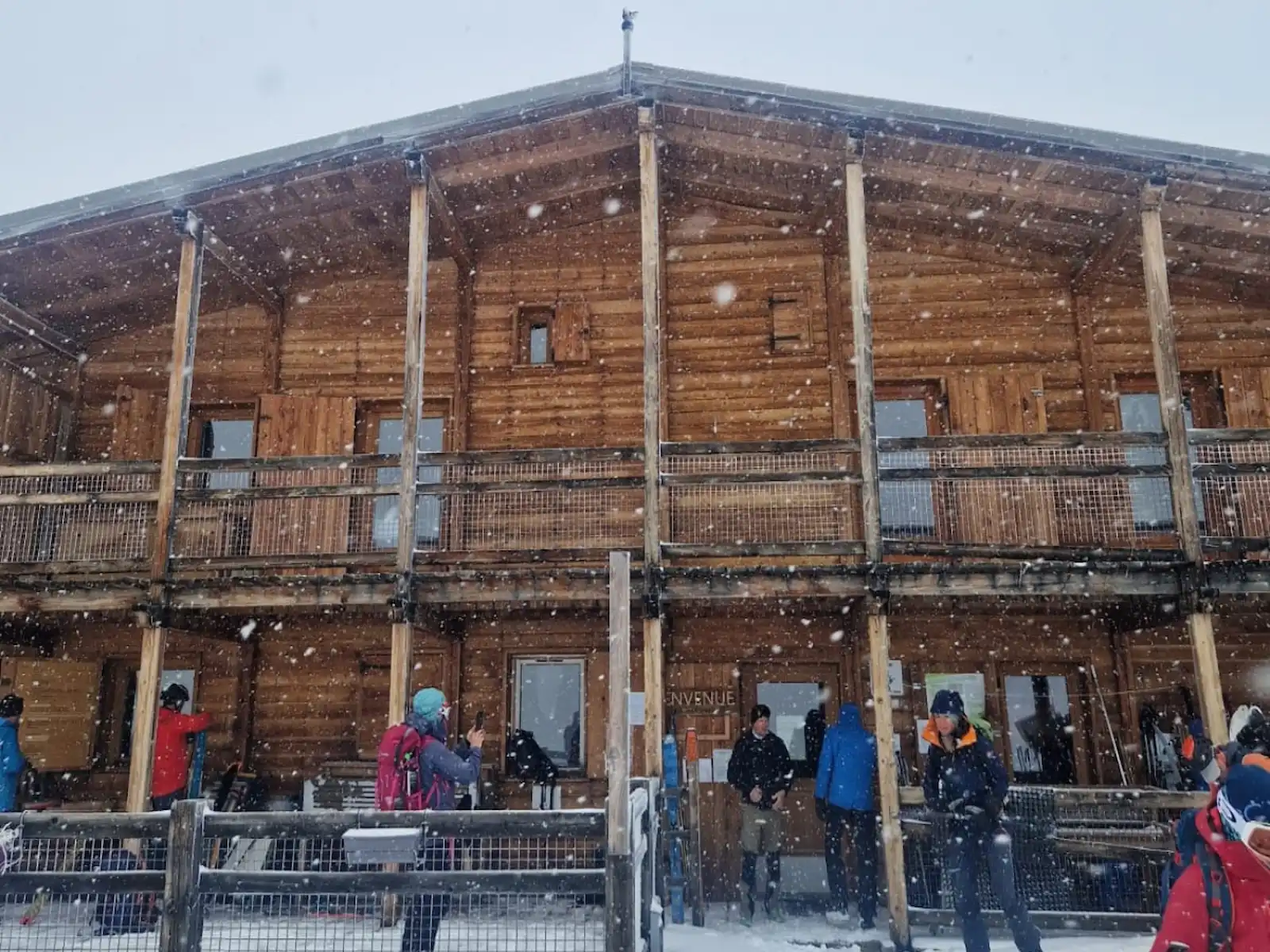
A mountain refuge has to manage water, electricity, heating and supplies with resources that are much more limited than they would be in the valley. This helps explain some of the things that can surprise first-time visitors, from paying for a shower to finding that there is nowhere to charge a phone.
Here is what you are likely to encounter during a winter stay.
Many guarded refuges have running water, but that does not necessarily mean the water from the tap is suitable for drinking. Some refuges provide potable water that you can use to refill your own bottle, while others sell bottled drinking water instead.
It is worth being prepared for drinking water to cost more than you would expect in the valley. Everything sold in a remote refuge has had to get there somehow, and we have even encountered refuges where a bottle of water cost around €10.
You also need to think about the following day's journey. If you are leaving the refuge for several hours on snowshoes or skis, you will probably want to set off with full bottles.
Knowing whether you can refill them at the refuge, or whether you will need to buy or carry additional water, is therefore a useful part of planning an overnight stay.
Some winter refuges have hot showers, others have cold showers and some have no shower at all. Where hot showers are available, they may cost extra and there may be a limit on how long you can use them.
For a one- or two-night refuge stay, going without a shower is generally less of an issue than first-time visitors imagine. Changing out of the clothes you have been travelling in and into clean, dry layers makes a big difference, and a quick wash with a small flannel or washcloth is often perfectly adequate.
If there is a hot shower, it is certainly a welcome luxury after a day outside. Just bear in mind that you are sharing it with other guests, so refuge showers tend to be functional rather than long and leisurely.
In a guarded refuge there will normally be toilet facilities, although these may be conventional flush toilets or dry toilets. Dry toilets are common in mountain environments where water and plumbing are more difficult to manage.
Toilets may be separate from the sleeping area or reached through another part of the building, so it is worth keeping your head torch somewhere easy to find during the night. Some unguarded winter refuges have toilets, while others have no toilet facilities at all.
Many guarded winter refuges are heated, particularly in the communal areas where guests eat and spend the evening. Other parts of the building may be cooler, especially overnight, so it is still useful to have warm, comfortable layers for the evening.
Unguarded winter refuges can be a different experience. Some have a wood-burning stove and a supply of wood for visitors, while others have little or no heating. In these refuges, having sufficiently warm clothing and sleeping equipment becomes much more important.
.webp)
Mountain refuges generally have shared accommodation rather than private bedrooms. You might sleep in a large dormitory, a smaller shared room, or on bunks or mattresses arranged next to one another.
Guarded refuges will often provide blankets or duvets, but bedding is not necessarily changed and washed between every guest as it would be in a hotel. Washing large quantities of bed linen is simply not practical in many mountain refuges.
For this reason, guests commonly sleep in their own sleeping bag liner, with the refuge's blankets or duvet over the top. Some refuges require a liner and may sell them if you arrive without one. They are lightweight, take up very little room and are well worth carrying for personal hygiene.
In an unguarded winter refuge, you may need your own sleeping bag as well. Mattresses and blankets are often available, but the sleeping set-up can be considerably more basic.
Sharing a dormitory means being considerate of other guests, particularly as people may go to bed or get up at different times.
And then there is snoring. A pair of earplugs takes up almost no room and can be one of the most useful things you bring.
In a guarded refuge, overnight stays will usually include or offer an evening meal and breakfast. Meals tend to be straightforward and substantial, exactly what most people want after a day travelling through the mountains.
Dinner is normally served at a set time, often around 19:00, with everyone eating together. This means arriving in good time matters. The guardian and their team need to welcome guests and get everyone settled before turning their attention to preparing and serving dinner. Unlike a hotel or restaurant, you cannot expect to arrive late and simply eat when it suits you.
Getting food to a mountain refuge is quite different from supplying a restaurant in the valley. Depending on the location, supplies may arrive by helicopter or be carried up to the refuge. This helps explain why menus are limited and why wasting food is particularly inappropriate.
If you have dietary requirements, let the refuge know when you book. Guardians need to plan meals and supplies in advance, and there may be less flexibility once you arrive.
Breakfast follows the rhythm of the people heading into the mountains. Mountaineers and ski tourers may be eating and leaving very early, sometimes before dawn, while other guests have breakfast later.
Many guarded refuges can also prepare a picnic or packed lunch for the following day's journey, usually if you order it in advance. These often cost around €15 and are particularly useful on hut-to-hut trips, when there may be nowhere to buy food during the day.
In an unguarded refuge, there is no one there to cook for you, so you will need to bring your own food and anything required to prepare it.
Having electricity in a refuge does not necessarily mean there will be sockets available for guests. The refuge needs its power for running the building, and charging personal devices may be restricted or simply not possible.
Some refuges do provide charging points, while others ask guests not to charge phones, cameras or other devices. Even where charging is available, there may only be a small number of sockets shared between everyone staying that night.
A small power bank is therefore well worth carrying on a winter refuge trip. After a full day of snowshoeing or ski touring, particularly in cold temperatures, your phone battery may already be running low. A power bank means you can recharge it without relying on facilities at the refuge.
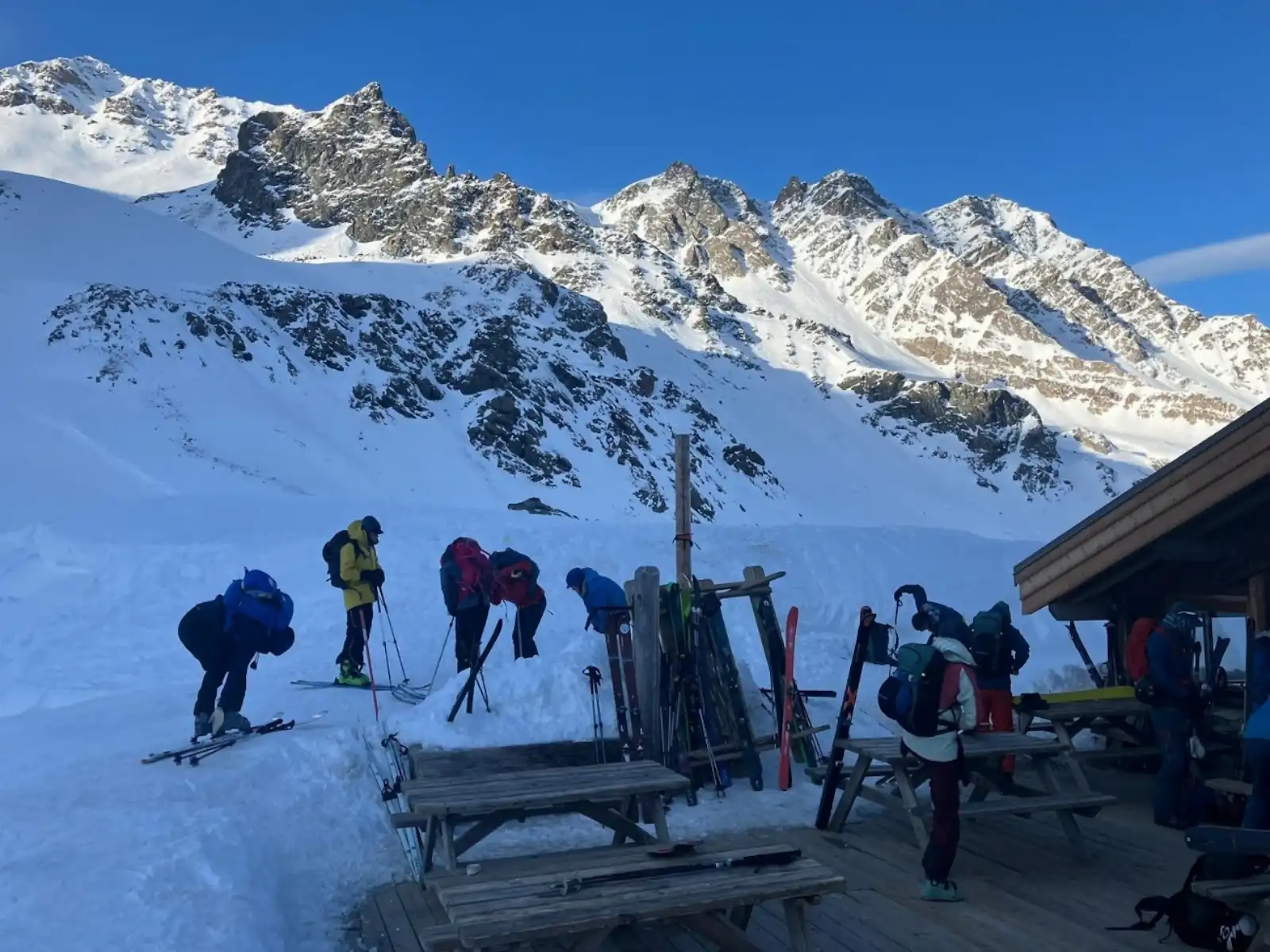
Arriving at a refuge in winter usually means arriving with quite a lot of equipment. Snowshoes or skis, poles, boots, gloves and outer layers all need somewhere to go, and some of them may be covered in snow or damp after the day's journey.
Outdoor boots are not normally worn in the living and sleeping areas of a refuge. There will usually be a designated place to leave them, and many guarded refuges provide slippers, Crocs or similar indoor footwear for guests to use inside.
Skis, snowshoes, poles and other equipment also need to be left in the appropriate storage area rather than taken into the dormitory. Your guardian will show you where everything belongs when you arrive.
Wet gloves and clothing can often be left to dry in a designated area. With several people all trying to dry winter kit at the same time, space can quickly become limited, so keeping your belongings together rather than spreading them around the refuge makes life easier for everyone.
Once your equipment is sorted, changing into dry clothes is one of the small pleasures of arriving at a refuge after a day out in the snow.
There is usually time to relax before dinner. People gather in the communal area, have a drink, chat, perhaps play cards or read. Having spent most of the day outside, many people are quite happy with an early night.
Dinner is a communal affair, with guests generally eating at the same time and often sharing tables with people they have not met before. It is one of the enjoyable parts of refuge life, and conversations naturally turn to where people have been that day, the conditions they encountered and where they are heading next.
Mornings tend to start early. People get dressed, have breakfast and prepare to head back out into the mountains, sometimes while others are still asleep. Organising your clothes and equipment the night before makes an early departure much easier and avoids unnecessary noise in the dormitory.
In the morning, you collect your boots and equipment, pack up and head out for another day in the mountains.
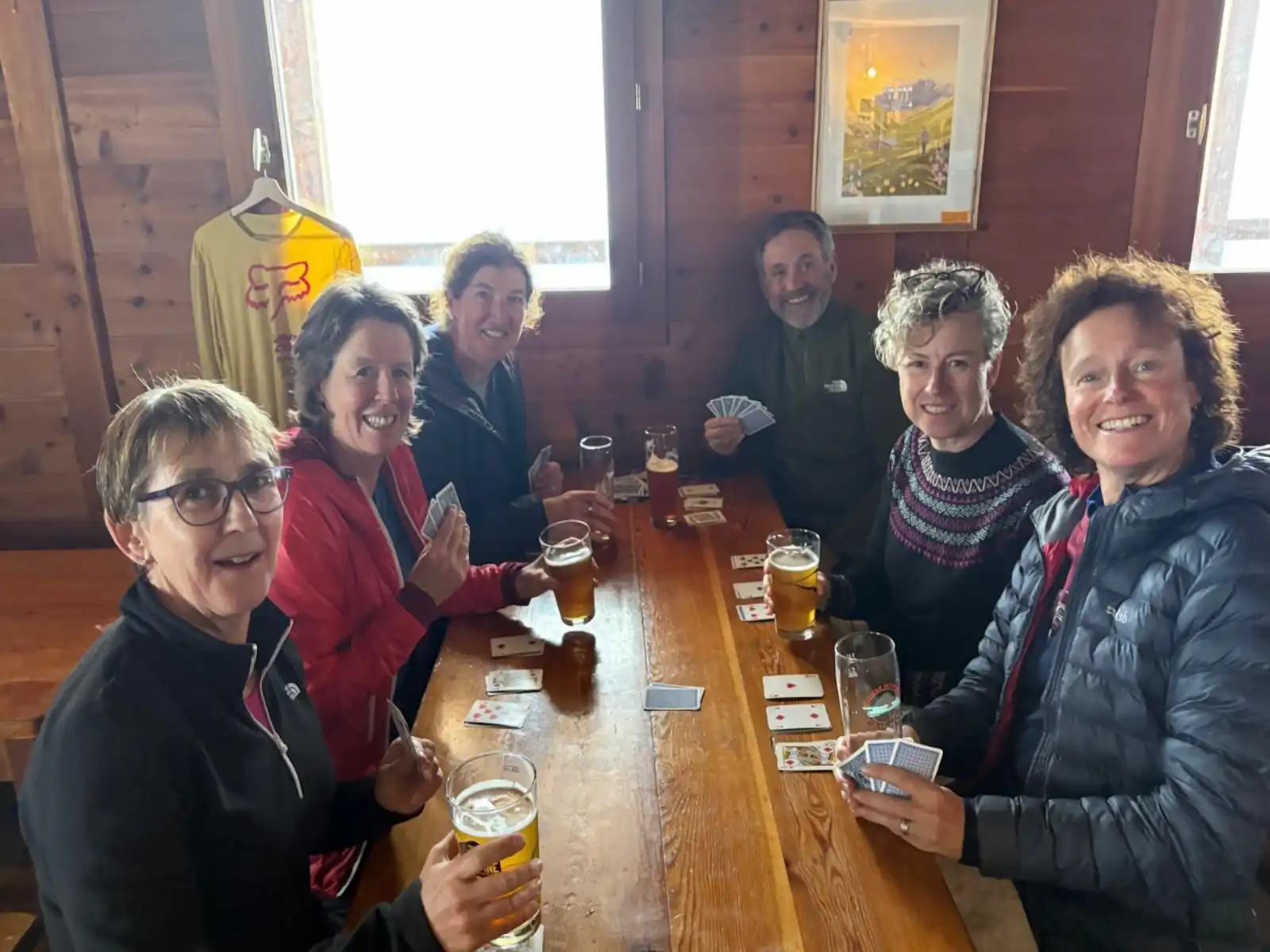
Mountain refuges are communal places, so a little consideration goes a long way. You are sharing sleeping areas, bathrooms, dining space and drying facilities with other people, while the guardian and their team are trying to keep everything running smoothly.
Respect the refuge's rules and the guardian's instructions. There is usually a practical reason for where boots are stored, when dinner is served or how particular facilities should be used. Arriving in good time also makes life easier for the team, particularly as dinner approaches.
Keep noise down in the dormitories, especially at night and early in the morning, and avoid using bright lights while other people are sleeping.
Leave shared areas tidy, don't leave litter behind and follow the refuge's arrangements for rubbish. In an unguarded refuge, this responsibility is even more important: there is no guardian coming in behind you to clean up. Leave the space ready for the next people, put equipment back where it belongs and make sure doors and shutters are properly secured when you leave.
Above all, remember that a refuge is not a hotel. It is a shared mountain shelter where guests, guardians and the people arriving next all depend on one another to use the space considerately.
For more on the customs of refuge life, including many that apply throughout the year, read our guide to mountain refuge etiquette.
By this point, most of the essentials will be familiar. For a guarded winter refuge, the extra items you need for the overnight stay itself are usually quite modest:
Sleeping bag liner – for use with the refuge bedding
Dry socks and comfortable evening layers – to change into when you arrive
Head torch – useful in dormitories and for early starts
Earplugs – worth their weight in gold in a shared dormitory
Small power bank – so you are not reliant on charging facilities
Flannel or washcloth and basic toiletries – particularly if there is no shower
Cash – useful where card payment is unavailable or unreliable
You may need additional equipment for an unguarded refuge, particularly a sleeping bag, food and cooking equipment.
This is only the kit associated with staying overnight. What you need for the mountain journey itself will depend on the activity, conditions and route. If you are planning a snowshoeing trip, our Hut-to-Hut Snowshoeing Packing Guide covers clothing, equipment and other essentials in more detail.
Staying in a mountain refuge allows you to travel further into the mountains, spend the evening away from the valley and continue your journey the following morning without returning to a road or resort.
Refuge life is simple and communal. There is something particularly satisfying about arriving at the end of a day on snowshoes or skis, changing into dry clothes, sitting down to a meal and sharing the evening with other people who have also spent their day in the mountains.
For first-time visitors, knowing how refuges work makes the experience much more straightforward. A few useful overnight essentials and an understanding of communal refuge life are really all you need.
If you are travelling independently, you will need to organise the practical details yourself. On an organised guided trip, your refuge bookings and much of the logistics are taken care of for you, and you will be advised about what you need to bring.
Several of our winter holidays include nights in mountain refuges, particularly snowshoeing and ski touring journeys. If you are interested in the latter but aren't sure what the activity involves, our guide Is Ski Touring in the Alps for Me? is a useful place to start.
When you picture a winter holiday in the French Alps, downhill skiing is probably one of the first t
Read More
When most people picture a walking holiday in the French Alps, they probably think of summer. The hi
Read More
The Alps have a way of making you feel very small, in the best possible way. From snow-covered peaks
Read More.jpg)
If you've tried to plan a holiday recently, you'll probably recognise this. A few searches on Google
Read More
0 comments
Submit a comment