
Self-Guided vs Guided Walking Holidays: Which One Is Right for You?
If you're planning a walking holiday, one of the first decisions you'll need to make is whether to c
Read MorePosted 25-07-2026 by Léa Papillon
Every July, the world's attention turns to the Alps.
As the Tour de France reaches the mountains, millions of fans line the roads while millions more watch from home as riders tackle some of cycling's most iconic climbs. This year is no different. In 2026, the race returned to the Southern French Alps with Stage 18 from Voiron to Orcières-Merlette, followed by the spectacular route from Gap to Alpe d'Huez.
For many cyclists, watching these stages sparks the same thought:
"I want to ride those roads one day."
And it's easy to see why. From the famous hairpins of Alpe d'Huez to the high-altitude slopes of the Galibier, these climbs have become part of cycling history, attracting riders from around the world.
But the Tour de France tells only part of the story.
Beyond the legendary passes are lesser-known climbs that have featured only occasionally in the race, along with countless mountain roads that have never appeared on television at all. Together, they reveal another side of the Alps, one filled with spectacular scenery, quieter roads and unforgettable riding.
Before we explore some of the hidden roads that many visitors overlook, let's start with the climbs that have earned their place on every cyclist's bucket list.
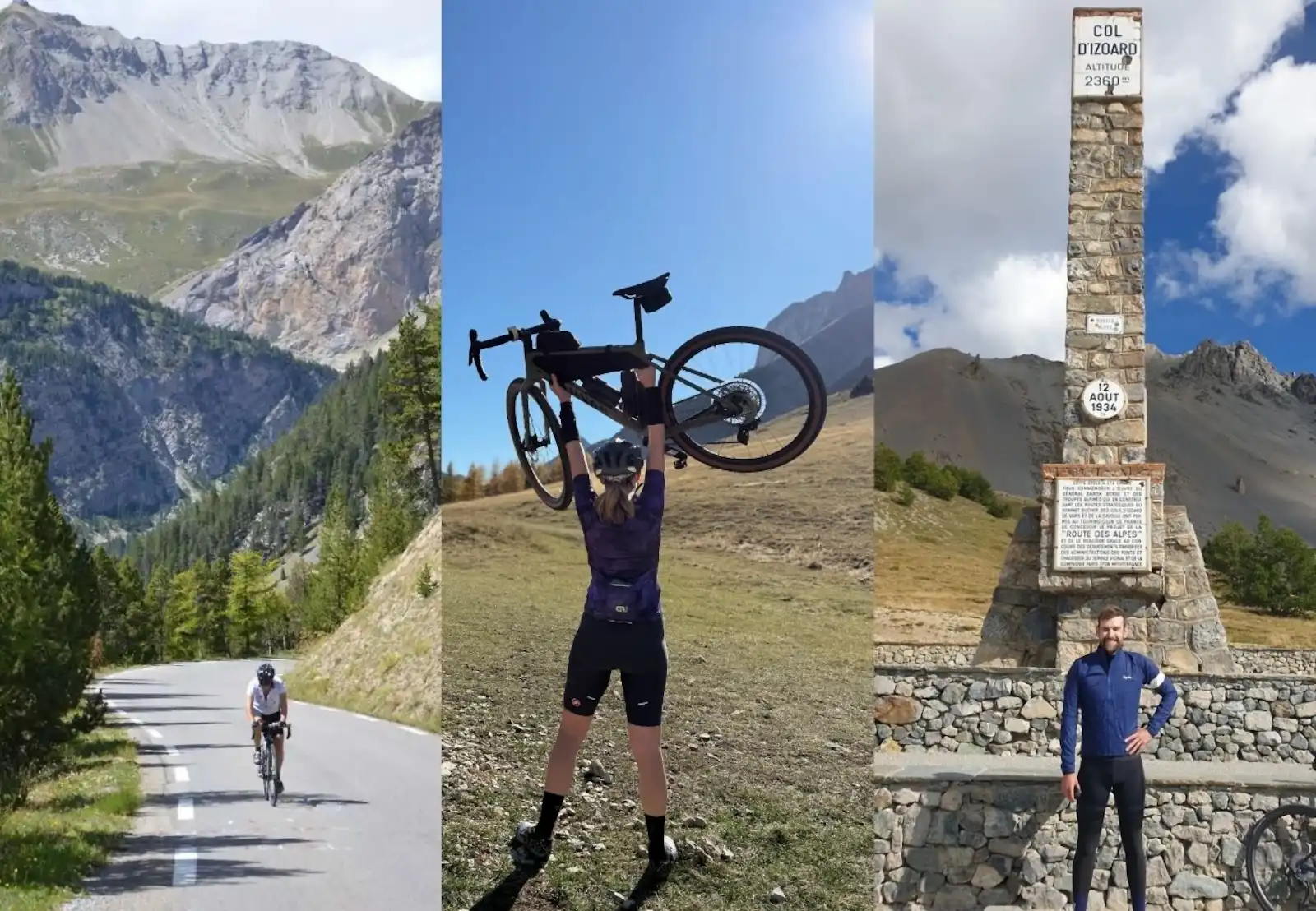
The legendary climbs of the Alps have earned their reputation for a reason.
Standing at the summit of the Galibier, riding through the Casse Déserte on the Izoard or tackling the famous 21 hairpins of Alpe d'Huez is an experience every cyclist remembers. These roads have shaped cycling history, becoming places that riders from around the world dream of conquering.
There are famous climbs, and then there's Alpe d'Huez.
With its 21 numbered hairpin bends climbing from Bourg d'Oisans to the ski resort above, it has become one of cycling's most iconic ascents. The Tour de France first finished here in 1952, creating what would become one of the sport's greatest traditions.
At around 13.8 kilometres long with an average gradient of just over 8%, the climb demands patience as much as power. The opening kilometres are among the steepest before the road settles into its famous sequence of switchbacks, each one revealing wider views across the Oisans Valley.
Each hairpin is numbered, creating natural milestones as you climb. Some riders count them down eagerly, while others feel like they barely move at all. Either way, reaching the summit is about much more than ticking off a famous climb, it's about experiencing one of the roads that has shaped cycling history.
If Alpe d'Huez is cycling's most famous climb, the Col du Galibier is one of its greatest adventures.
At 2,642 metres, it is among the highest paved mountain passes regularly featured in the Tour de France. Many cyclists approach it via the Col du Télégraphe, creating a combined ascent of more than 35 kilometres before the road climbs into a dramatic high-mountain landscape.
Above 2,000 metres, the scenery changes completely. Forests give way to rocky slopes, the air becomes thinner and temperatures can drop quickly, making every pedal stroke feel that little bit harder.
Standing beside the famous summit sign, surrounded by some of the highest peaks in the French Alps, it's easy to understand why the Galibier has challenged generations of Tour riders and continues to attract cyclists from around the world.
Some climbs are remembered for their difficulty. Others for their scenery.
The Col d'Izoard is unforgettable because it offers both.
Connecting Briançon with the Queyras Valley, the climb reaches 2,360 metres before passing through the spectacular Casse Déserte, where jagged limestone formations create one of the Alps' most distinctive landscapes.
The Tour de France has crossed the Izoard dozens of times since its first appearance in 1922, cementing its place among the race's legendary mountain passes. Yet what many cyclists remember most is not just the climb itself, but the scenery. The dramatic rock formations and open alpine landscape make this one of those rare roads where it's worth stopping simply to take in the view.
Few climbs can match the sense of achievement that comes with reaching the Cime de la Bonette.
At 2,802 metres, it is the highest paved road in France and one of the highest rideable roads in Europe. As the road climbs above the tree line, the landscape becomes increasingly wild, with sweeping views stretching across the Southern Alps.
The Tour de France has crossed the Bonette several times over the years, but its remote location means it appears only occasionally. For cyclists, however, that's part of its appeal. Without the crowds found on some of the Tour's most famous climbs, the Bonette offers a quieter mountain adventure where the scenery and the sheer altitude become the highlight of the ride.
Known as the Giant of Provence, Ventoux rises alone above the surrounding countryside, its distinctive white limestone summit visible from miles away. The climb has become legendary thanks to both its Tour de France history and its unforgiving upper slopes.
The ascent from Bédoin stretches for just over 21 kilometres. After a gentle start through vineyards, the road enters a long forest section before emerging onto the famous barren summit, where riders face an exposed landscape of rock, wind and sun unlike anywhere else in France.
Reaching the top is a rite of passage for many cyclists—and a reminder that some climbs become legendary not just because of their difficulty, but because of the experience they offer.
.webp)
When people think of Tour de France climbs, names like Alpe d'Huez and Galibier usually come to mind.
But the race has introduced riders to many spectacular roads that simply do not feature often enough to achieve the same level of recognition. Some appear only occasionally because of the constantly changing route, while others have become memorable thanks to one unforgettable stage.
These climbs may not yet be household names, but they deserve a place on every cyclist's radar.
The Col du Noyer has featured only a handful of times in the Tour de France, but each appearance has reminded viewers what a remarkable climb it is.
Located between the Champsaur and Dévoluy valleys, the road combines demanding gradients with beautiful mountain scenery, offering a quieter alternative to many of the Alps' better-known passes.
The finish at Orcières-Merlette has produced memorable Tour de France moments over the years, and in 2026 it once again returned to centre stage as the race finished there during Stage 18.
The climb to the ski resort is steady rather than brutally steep, but its altitude, mountain scenery and position in the Southern Alps make it a rewarding ascent in its own right. For many riders visiting the region, it is also an opportunity to experience one of the Tour's more recent summit finishes without the crowds associated with cycling's biggest names.
The Southern Alps regularly produce some of the Tour de France's most beautiful stages, and the Col de Vars is one of the reasons why.
Frequently combined with nearby climbs such as Risoul, it offers long mountain roads, wide-open scenery and a distinctly Alpine atmosphere. While these climbs may not have the same international recognition as Alpe d'Huez or Galibier, they have repeatedly provided dramatic racing and remain favourites among cyclists exploring the region.
Although it has only appeared a handful of times in Tour de France history, the Col du Granon is widely regarded as one of the hardest paved climbs in France.
Its steep gradients and relentless final kilometres make it a serious challenge, while its return to the Tour in 2022 produced one of the race's defining mountain stages in recent years.
For riders looking to test themselves on a climb that combines difficulty with spectacular scenery, the Granon deserves far more attention than it often receives.
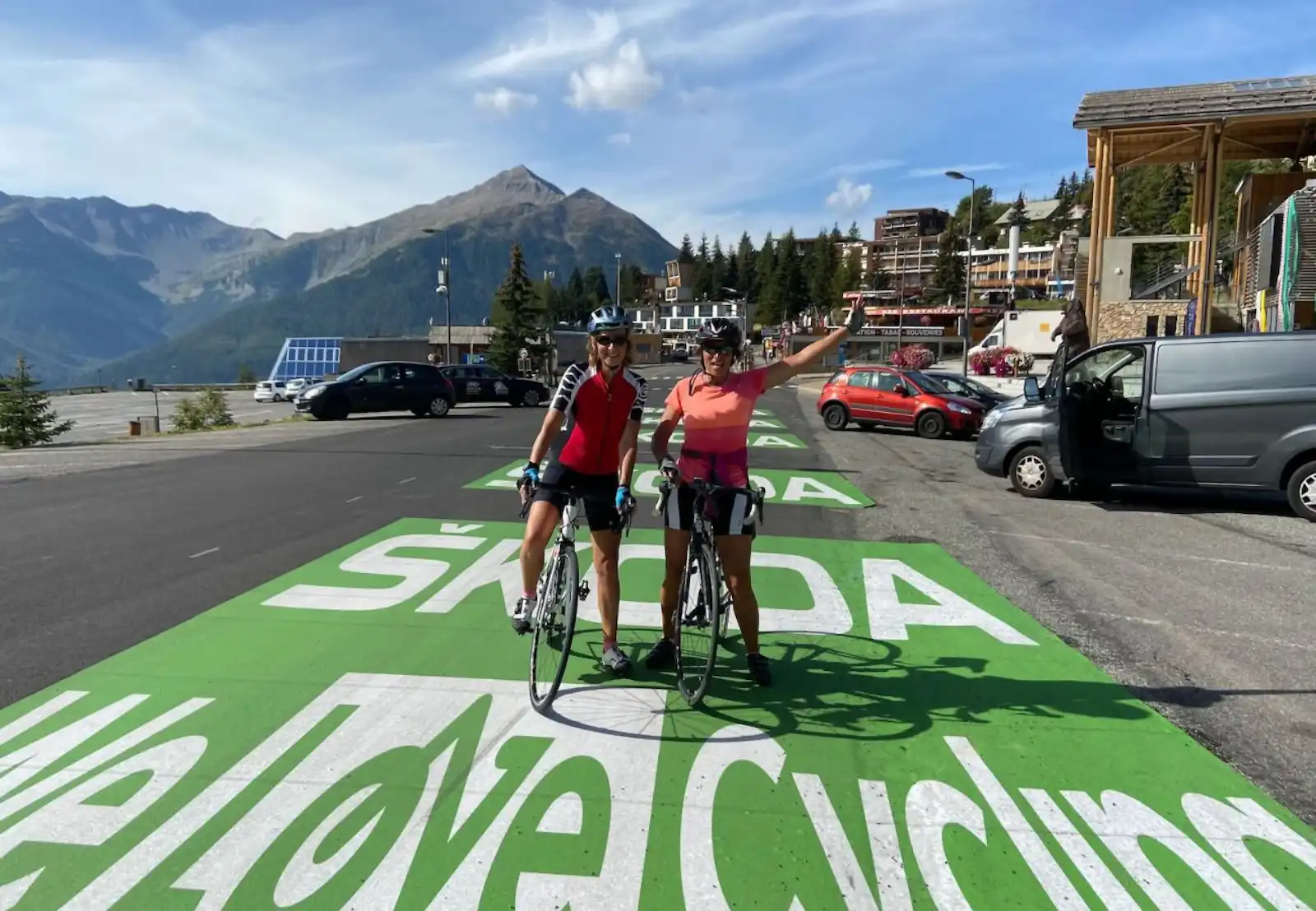
The legendary climbs of the Alps have earned their reputation for a reason.
But the Alps are much bigger than the roads you see on television.
Beyond the famous passes are countless mountain roads that remain known mainly by local cyclists. They are not missing from the Tour de France because they lack beauty or challenge, but often because they are harder to integrate into a race of this scale for logistical reasons and lack of infrastructure. Accommodating the Tour and the thousands of people associated with it, is a big ask, and that's before thinking about the fans!
And for cyclists, that is exactly what makes them special: quieter roads, authentic mountain villages and viewpoints where you are more likely to meet local riders than crowds of spectators.
These are the climbs where discovering the Alps becomes about more than following a famous route.
Hidden above one of the Southern Alps’ most spectacular landscapes, Mont Colombis is a climb that surprises almost every cyclist who discovers it.
While it remains far less famous internationally than the great Tour de France passes, the experience of riding it is unforgettable. The road climbs above Lac de Serre-Ponçon, revealing increasingly impressive views of turquoise water, rugged peaks and wide Alpine landscapes.
Unlike the famous Tour climbs, Mont Colombis offers a quieter kind of mountain adventure. There are no crowds lining the road or famous race moments attached to each corner. Instead, cyclists are rewarded with peaceful roads and one of the most impressive viewpoints in the region.
It is a perfect example of what makes the hidden climbs of the Alps so special: roads that may not be part of cycling history, but create memories just as powerful.
Not every unforgettable climb needs to take hours.
Overlooking Lac de Serre-Ponçon, the Col de Pontis offers a very different experience from the long Alpine giants of the Tour de France. Shorter, quieter and less known, it combines a challenging ascent with some of the most impressive scenery around the lake.
The road climbs through forested slopes before opening up to spectacular views across the water and surrounding mountains. Despite its shorter distance, the changing landscapes make it feel like a true mountain adventure.
For cyclists exploring the Serre-Ponçon area, it is the kind of climb that is easy to miss if you only follow the famous routes. Yet those who know the region often include it for exactly that reason: peaceful roads, dramatic scenery and the feeling of discovering somewhere away from the main cycling routes.
Near the town of Gap, the Col de Moissière offers another example of the roads that make the Southern Alps such a special cycling destination.
Unlike the legendary passes that attract riders from around the world, this climb remains largely known by local cyclists. It does not have the reputation of the Galibier or the fame of Alpe d’Huez, but it offers something those climbs often cannot: tranquillity.
The road takes you away from the busiest Alpine routes, through forests and open mountain landscapes where the pace naturally slows down. It is the kind of climb where you can stop for a photograph, enjoy the scenery and feel completely disconnected from everyday life.
For riders who want to experience the Alps beyond the famous names, these quieter roads are often the ones they remember most.
Tucked beneath the dramatic limestone cliffs of Céüse, the Montée de Céüse is one of those climbs that many cyclists discover only through local recommendation.
The road climbs steadily through forest before opening onto spectacular views across the Gapençais and the surrounding mountains. While it lacks the fame of the region's Tour de France climbs, it rewards riders with quiet roads, beautiful scenery and a feeling of escaping the busier cycling routes.
It is exactly the kind of climb that reminds you some of the Alps' best roads are the ones that rarely appear in guidebooks.
The beauty of cycling in the French Alps is that you do not have to choose between legendary climbs and hidden mountain roads.
Riding the Galibier, Izoard or Alpe d’Huez means following in the footsteps of cycling legends and experiencing some of the sport’s most iconic landscapes. But the quieter roads of the Alps reveal another side of the mountains: peaceful valleys, authentic villages and climbs where the journey matters just as much as the summit.
This balance is what makes the Alps such a unique cycling destination. A great cycling route is not only about distance, elevation gain or the number of cols completed. It is about the experience along the way: the viewpoints that make you stop, the villages you discover and the quiet roads where you can truly enjoy the landscape.
The area around Lac de Serre-Ponçon is a perfect example, offering everything from scenic lakeside rides to challenging mountain ascents. Discover more about this incredible cycling destination in our guide to cycling around Serre-Ponçon Lake.
For riders looking to experience the Alps away from traffic and crowds, car-free cycling events and quiet mountain roads offer another way to explore the region. Find out more in our guide to car-free cycling routes and quiet roads in the French Alps.
Whether you are chasing famous Tour de France climbs or searching for lesser-known roads, the Alps always offer another climb to discover.
From legendary Tour de France cols to quieter local roads, our cycling holidays are designed to help you experience the best of the Alps through carefully chosen routes, incredible scenery and authentic mountain experiences.
If you're planning a walking holiday, one of the first decisions you'll need to make is whether to c
Read More
Via ferrata often looks more intimidating than it actually is. From the outside, it can be difficult
Read More
For many climbers, the first time standing at the base of an outdoor cliff is a moment of hesitation
Read More.jpg)
Imagine a holiday where grandparents, parents, and kids all finish the day smiling because everyone
Read More
0 comments
Submit a comment